


Quick Breakdown
- Seasonal fleets can carry more risk with the addition of unfamiliar drivers, more equipment in the field, and workers who may not stick around long enough to build good habits.
- GPS tracking helps you verify routes, catch timesheet issues, protect equipment from misuse, and set clear expectations without micromanaging every crew.
- Getting systems in place before hiring starts with geofences, detailed policies, and coaching workflows can make the season run smoother and be more profitable.
Hiring for a seasonal fleet hits fast, and your crew dynamics can change dramatically depending on who shows up. You can go from running a tight group that knows your routes, your equipment, and your expectations to starting fresh with new faces and varying experience levels — some great and others who won't stick around past the first month.
That's not pessimism, it's the industry reality. According to the National Association of Landscape Professionals, 51% of landscaping company owners cite staffing as a top business challenge, and industry data shows 30-40% of new hires leave within their first month.
Which means you're handing the keys to expensive machinery to workers who are new to your business, your customers, and your standards, without the luxury of a weeks-long onboarding process.
A bunch of new drivers on unfamiliar roads, potentially without proper training? Not ideal.
This is where GPS fleet tracking tools earn their keep — providing real-time location data so you can manage driver safety and asset security during the seasonal rush, without babysitting every truck on the road.
Sorting out seasonal chaos
There are several ways GPS tracking can improve your busy seasons. Here are four common GPS uses every fleet can benefit from:
1. Getting new drivers up to speed (without babysitting them)
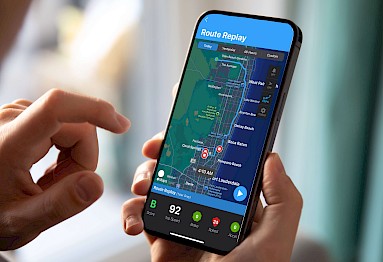
You don't have time to micro-manage every new driver — and even if you did, they’d likely resent that kind of coddling. By tracking your vehicles with GPS, you can verify routes are being run correctly, use geofencing to get automatic confirmation when a crew arrives at a job (via geofencing), and review trip histories to catch slow turnarounds without pestering the crew with disruptive check-ins.
2. Protecting equipment from misuse
Seasonal workers don't always treat equipment with the same care as your year-round crew would, especially if they think no one is watching. They haven’t had time to build up the trust and rapport that help keep them invested. When someone knows they'll be gone when the grass stops growing, or the snow stops falling, a scraped trailer or a mower left in the rain lands differently for them than it does for you. Not to mention, high-cost machinery and tools are also prime targets for theft during busy seasons.
GPS and asset tracking close that gap. After-hours movement alerts catch personal use of company vehicles. Geofences around your storage yards and equipment depots flag anything moving when it shouldn't be. For lawn care and landscaping operations running expensive mowing equipment between multiple job sites daily, knowing where that equipment is at the end of the day isn't optional.
3. Verifying hours and preventing timesheet issues
GPS timestamps provide an indisputable record of exactly when a vehicle arrives at (and departs from) a job site. They also provide a log of any late starts or unauthorized extended breaks, which is particularly crucial if you operate in states with strict wage laws like California, New York, or Illinois, where timesheet disputes carry heavy legal and financial risks.
4. Managing a mixed fleet of year-round and seasonal vehicles
One of the biggest financial hurdles of managing seasonal employees is paying for technology on vehicles that sit idle for half the year. A lawn care company that ramps up from 4 trucks to 12 in March doesn’t need to pay for all those devices in winter. A lot of GPS providers lock you into year-round fees regardless of usage. Look for more flexible GPS options like Linxup’s seasonal suspension so you’re only paying when vehicles are actually on the road.
How to set expectations with seasonal crews before they start
Lawn care crews and snow removal operators deal with high turnover by nature. Industry data shows 30-40% of new hires leave within their first month, and at roughly $1,500 per replacement for an hourly worker, that churn adds up fast even in a short season.
The operators who keep more of their seasonal crew intact are usually the ones who set clear expectations from day one — not week three when problems have already surfaced. A few things worth getting right before anyone gets behind the wheel:
- Be upfront about GPS tracking during hiring: Tell candidates about your GPS tracking policies during the interview or onboarding process.
- Establish clear boundaries: Set firm, written policies regarding after-hours use, personal use of company vehicles, and what constitutes an authorized stop.
- Use it for constructive coaching: If you couple your GPS fleet management with dash cams, use the footage as a helpful coaching tool to improve driver safety rather than one strictly for punishment.
- Use it to protect your crew: GPS logs can serve as definitive proof that workers did their jobs correctly, protecting them from false complaints.
Before seasonal hiring begins
To hit the ground running on day one of the season, you need to prepare your systems in advance:
- Prep your hardware: Ensure all vehicles are equipped and all GPS devices are fully activated before your workers show up for their first shift.
- Map your locations: Pre-set your geofences for routine job sites, storage yards and supply depots so the data populates correctly from day one.
- Establish a baseline: Use the driving habits of your trusted, year-round staff to establish what safe, efficient driving looks like for your business.
- Ready your coaching workflow: Have a plan in place to address aggressive driving or inefficiency during week one, rather than waiting until week six when bad habits are locked in.
- Incentivize good behavior: Seasonal workers who feel like numbers don't last. Keep the good ones around with driver scorecards built into your GPS system. This gives you an objective way to track safe driving habits like speed, hard braking, and idle time. Linxup's Applause integration connects that performance data to a real recognition and incentive program, so you can reward seasonal workers for safe, efficient driving rather than only using the data to flag problems. For workers new to your business and trying to prove themselves, that feedback loop matters.
FAQs
Can I pause GPS subscriptions for seasonal vehicles during the off-season? That depends on your provider. While many tracking companies require twelve-month commitments for all active devices, providers like Linxup offer convenient pause and suspend options. This allows you to stop payments on seasonal vehicles while they sit idle in the offseason months.
Do seasonal workers have different legal rights regarding GPS monitoring? Generally, no. Employers have the legal right to monitor company-owned vehicles and assets, regardless of whether the driver is full-time, part-time, or seasonal. However, it is always best practice (and required in some jurisdictions) to clearly disclose the tracking policy in writing to all employees before they operate the vehicles.
How do I handle a seasonal worker who refuses GPS tracking? Operating company vehicles is a privilege and a job requirement. Tech tools are used to enhance safety, ensure accurate pay, and provide protection against customer complaints; if a seasonal worker refuses to drive a vehicle with a GPS tracker, it should be handled as a standard policy violation.
What's the fastest way to add new vehicles to a GPS fleet tracking system? By using plug-and-play OBD-II tracking devices. These plug directly into the port under the dashboard of almost any standard vehicle and require zero technical expertise or professional installation. You can activate them online in minutes, making them ideal for scaling up a seasonal fleet quickly.