Enhancing Safety with Tow Truck Cameras
Turn Critical Moments into Reliable Insight
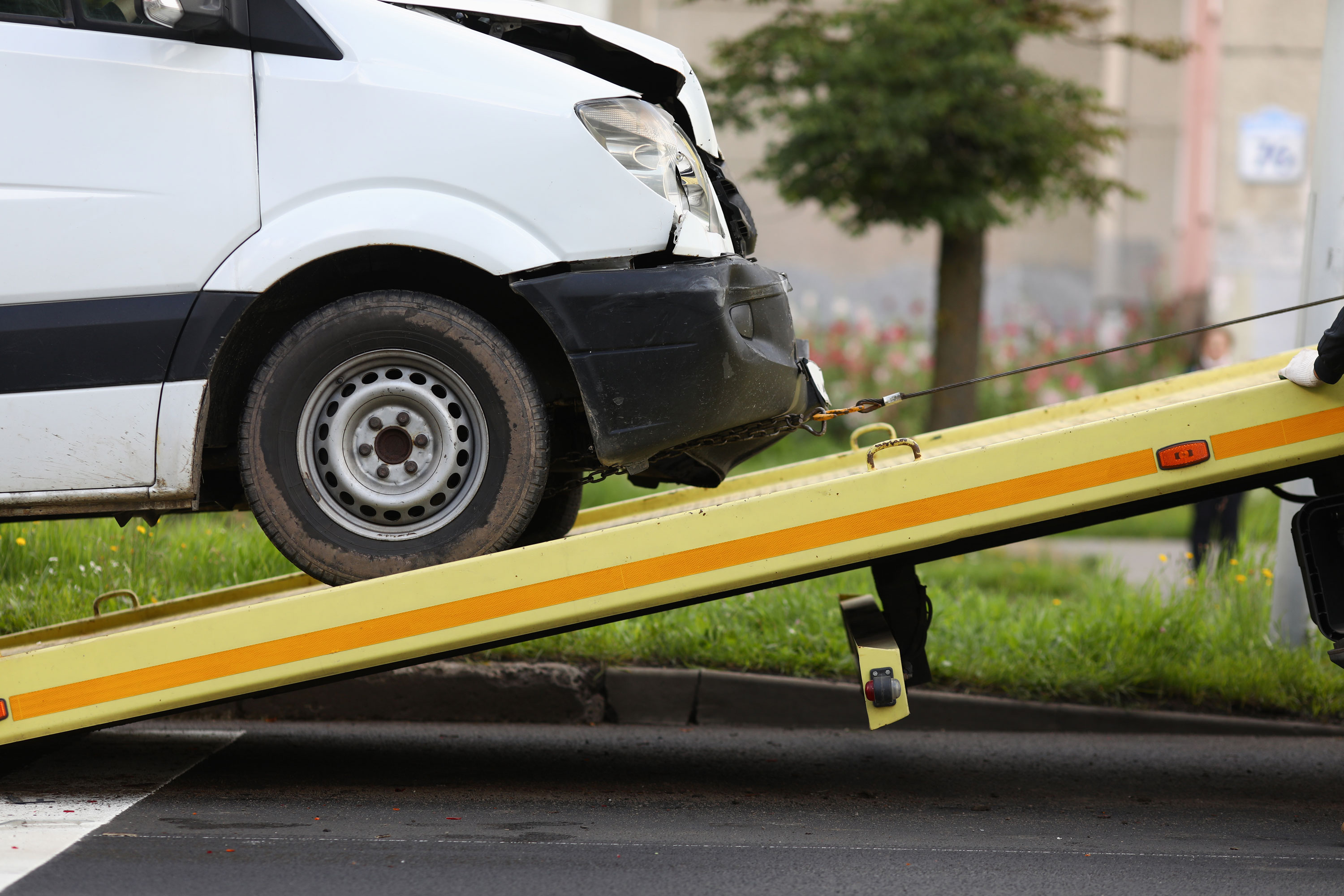
Tow truck cameras assist towing operators in documenting various aspects of their work, such as the road conditions, the recovery scene, the vehicle being transported, and the actions taken during each call. A well-designed tow truck camera system enhances safety, improves accountability, speeds up claim responses, and provides better proof of service—all without complicating the driver's daily tasks. For fleet operators, the true value lies in converting critical moments into reliable insights.
"We get discounts on our premiums for having the cameras and using the footage to improve driving habits. That's becoming a lot more common in the insurance world."
Alyn Sheheen
Office Manager, Frank Bobo's Wrecker Service
What do tow truck cameras actually do?
Tow truck cameras provide video coverage from key angles around the truck, allowing operators and fleet managers to review what happened before, during, and after a towing event. Front dash cameras capture traffic conditions, driver behavior, sudden stops, lane changes, and impacts, while rear-facing cameras document hook-ups, loading, unloading, backing, and the towed vehicle. Together, these cameras offer a comprehensive view of each job.
For towing businesses, having this visibility is crucial because each call may involve tight spaces, stressed motorists, traffic hazards, property risks, and time constraints. A camera system provides a neutral record when memories differ or when details are overlooked. It also encourages more consistent driving and operational habits, as drivers know safety incidents can be reviewed and used for coaching.
The safety case for front and rear visibility
Towing is not a typical driving situation. A tow truck may need to stop on the shoulder, reverse near damaged vehicles, navigate through parking lots, or operate in traffic while connected to another vehicle. Cameras help minimize blind spots and provide a record of the surroundings. Cameras help minimize blind spots and provide a record of the conditions surrounding the truck.
Front dash cameras
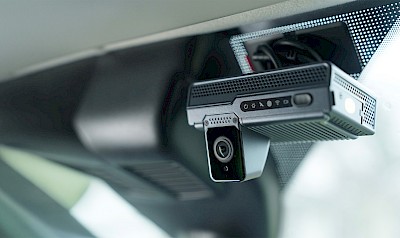
Front dash cameras provide essential visibility for road incidents by recording everything the driver sees through the windshield. This includes traffic signals, sudden lane changes, road debris, abrupt braking, weather conditions, and nearby vehicles' behavior. In the event of a collision or near miss, footage from the front-facing camera can help determine factors such as whether the tow truck had the right of way, maintained its lane, or reacted appropriately.
Additionally, these cameras assist in driver coaching. Fleet managers can analyze incidents involving harsh braking, distractions, rolling stops, or following distance issues and use these moments for focused training. The aim is not to "catch" drivers making mistakes, but rather to support their safe return from high-pressure situations.
Rear-facing cameras
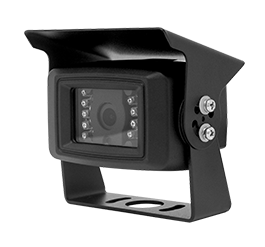
Rear-facing cameras are particularly important for tow trucks because much essential work occurs behind the cab. These cameras can capture the vehicle being loaded, the securement process, the rear work zone, and the actions of other drivers approaching from behind. This footage is valuable during roadside recovery, impound work, dealership transport, private-property towing, and accident response.
Additionally, a rear-facing camera can help document that a vehicle was properly positioned and transported. If a customer later claims that damage occurred during towing, the footage may provide evidence of the vehicle's condition at pick-up, how it was secured, and what transpired during the transport.
Proof of service that protects the business
Dash cameras are an incredible asset for documenting essential service details, like when a truck arrives, its exact positioning, the vehicle involved, and the actions taken on-site! For fleets serving police rotations, motor clubs, private-property accounts, dealerships, or commercial clients, this visual record can bolster invoices and service notes and help resolve disputes.
The proof-of-service footage can be invaluable, capturing moments such as:
- The tow truck's arrival at the service location
- The customer and vehicle presence on-site
- The condition of the vehicle pre-loading
- Detailed hook-up, winching, loading, and unloading activities
- The drop-off location and the vehicle's final placement
- Any road or property conditions impacting the job
Dash cameras aren't just about safety; they're a vital operations record. When a customer doubts whether service was completed, or when an account needs clarity, that video footage empowers the team to respond confidently and eliminate guesswork. With a dash camera, you're not just enhancing safety—you're improving transparency and accountability.
How can camera footage help fight accident claims?
Camera footage can be instrumental in addressing accident claims by providing a clear sequence of events, rather than solely relying on driver statements, customer complaints, or third-party reports. In the towing industry, claims may involve allegations of vehicle damage, traffic collisions, backing incidents, loading disputes, or accusations of improper operator conduct. Video evidence can clarify timing, vehicle condition, road behavior, and the driver's actions.
For instance, if another driver cuts in front of a tow truck and then claims that the truck caused the accident, front dash-camera footage may reveal the lane positions and traffic movements that occurred. Similarly, if a vehicle owner asserts that damage occurred during the loading process, rear-facing footage can show whether the damage existed before hook-up or whether the securement process was executed correctly.
The practical benefits of using camera footage are speed and clarity. Instead of spending days sorting through conflicting accounts, a fleet can swiftly review the footage, preserve the relevant clips, and share them with the appropriate parties when necessary. This approach helps reduce uncertainty and strengthens the business's position when defending against inaccurate or exaggerated claims.
Insurance benefits and risk management
Tow truck cameras can be a fantastic way to potentially lower insurance costs in the long run! They promote safer practices, clarify claims, and provide strong evidence in case of incidents. While discounts aren't guaranteed and vary by insurer and other factors, many fleets enthusiastically see cameras as an essential part of a smart risk management approach. It's an exciting step toward a safer and more cost-effective future!
The insurance value usually comes from several practical improvements:
-
Better claim evidence: Footage can show fault more clearly than a written statement alone.
-
Reduced fraudulent claims: Video may discourage or disprove claims that do not match the facts.
-
Improved driver coaching: Managers can address risky habits before they become costly incidents.
-
Faster incident review: The fleet can respond quickly with documentation instead of uncertainty.
-
Stronger safety culture: Drivers and managers work from the same visible record.
For towing companies, even one disputed incident can consume time, money, and attention. Cameras help make risk more manageable because the business can see what happened and respond based on evidence.
Choosing the right Tow Truck Camera System
An effective Tow Truck Camera System should be tailored to the specific needs of your truck's operation! Whether it's a light-duty roadside unit, a rollback, or a heavy-duty recovery truck, each has unique requirements for angles, mounts, and recording priorities. The ideal setup not only enhances driver visibility but also equips managers with essential documentation for every call.
Look for a system that supports:
-
Front dash cameras for road events and driver perspective
-
Rear-facing cameras for loading, towing, backing, and drop-off documentation
-
Clear video quality in daylight, low light, and poor weather conditions
-
Secure storage so important footage is not overwritten too quickly
-
Easy clip retrieval for claims, coaching, or customer disputes
-
Durable hardware suited to commercial vehicle use
-
Simple operation so drivers are not distracted by the technology
Many truck owners are familiar with integrated towing aids. These OEM-style visibility tools assist with trailer positioning and enhance driver confidence. However, towing fleets often require more comprehensive solutions that include broader event recording, claim documentation, and multi-angle coverage. Choosing the right solution depends on whether the focus is on easier maneuvering or on maintaining a complete safety and accountability record.
Implementation turns cameras into insight.
Installing cameras is just the beginning. To maximize their benefits, fleets should establish guidelines on how the footage will be used, who will have access to it, how long it will be stored, and which incidents warrant a review. Setting clear expectations helps drivers understand that the cameras serve to protect both them and the company.
A practical rollout can include:
-
Explain why the cameras are being installed and what they record
-
Train drivers on basic system behavior and privacy expectations
-
Create a process for flagging incidents immediately after they happen
-
Review footage for coaching patterns, not just major accidents
-
Preserve clips related to claims, complaints, or proof-of-service disputes
-
Revisit camera angles after real-world use to close visibility gaps
The Fleet Insight mindset is simple: collect the moments that matter, turn them into usable information, and use that information to run a safer, sharper towing operation.
Safer towing starts with better visibility.
Tow truck cameras are a fantastic way to give fleets an enhanced view of the road, work zones, and any disputed incidents. With front dash cameras boosting road safety and defending against accident claims, and rear cameras documenting the recovery process and vehicle status, the benefits are immense! When chosen and managed well, a Tow Truck Camera System not only protects drivers and supports customers but also fosters accountability and empowers businesses to operate confidently on every call. Embrace the future of towing with this invaluable technology!
FAQs about Tow Truck Cameras
Documented video evidence and a clean safety record can support better pricing at renewal. In Linxup's own safety survey, 88% of fleet managers said dash cameras helped reduce or defend against accident claims.
A fleet dash cam is a professional-grade camera system built specifically for commercial vehicle operations. While a consumer dash cam is typically a single-channel device that records locally to an SD card, fleet-grade systems are engineered for centralized management across multiple vehicles simultaneously.
The most fundamental operational difference is connectivity. Consumer cameras require physically retrieving a memory card and manually reviewing footage — a process that can take 12–24 hours from incident to review. Fleet dash cam systems connected via LTE or 5G upload critical event footage automatically, often within seconds, allowing managers to access, share, and act on footage from any location without touching the vehicle.
Fleet systems also integrate directly with GPS tracking and telematics platforms, correlating video with vehicle speed, location, and driving behavior data. This turns a camera from a passive recorder into an active management tool — surfacing coaching opportunities, flagging unsafe patterns, and providing timestamped, GPS-corroborated evidence that holds up in insurance disputes and litigation.
Configuration options have expanded significantly. Front-facing (single-channel) cameras are the most common starting point, capturing road conditions, collisions, and near-misses ahead of the vehicle. Dual-channel systems add a driver-facing lens to monitor attentiveness and in-cab behavior. Multi-channel configurations — covering front, rear, sides, and interior — are common in high-liability industries such as construction, logistics, and public transit.
For SMB field service fleets, the practical case for fleet-grade hardware comes down to three things consumer cameras cannot provide: centralized cloud management across all vehicles, automatic event-triggered upload with no manual retrieval, and integration with fleet management software for coaching and reporting workflows.
With dozens of vendors in the market all claiming "AI-powered safety" and "proven ROI," vendor selection comes down to a handful of operational questions that go well beyond the demo.
Connectivity and footage retrieval speed- this is non-negotiable. Ask: How long after an event does footage auto-upload? Can I request specific time windows on demand? What happens in areas with poor cellular coverage? If the answer involves any manual retrieval step before footage is available, the system will fail you when you need it most — specifically, when your insurance adjuster needs footage within 24 hours of an incident.
Pricing structure transparency- get itemized quotes covering hardware cost (per unit), installation cost (per vehicle), and ongoing monthly fees (per vehicle). Understand what's included in the monthly fee vs. what's billed separately: cloud storage, AI processing, extended retention, additional users. Pricing in this category is frequently bundled in ways that obscure the true per-vehicle total cost of ownership.
Platform usability for coaching- ask to see a live demo of the coaching workflow. How quickly can a manager pull a specific driver's event history for the past week? Can clips be exported and shared directly with a driver or insurer? If the safety manager can't act on a flagged event in under 10 minutes, it won't happen consistently.
Footage ownership- confirm in writing—not verbally— that you retain full ownership of all footage and can export it without vendor involvement, including after contract termination.
FMCSA compliance- for DOT-regulated carriers, confirm that the system meets FMCSA windshield placement rules under 49 CFR § 393.60, supports the Crash Preventability Determination Program by producing clean chain-of-custody footage, and integrates with your ELD if required. All 50 states permit employer video monitoring of commercial vehicle operations when employees are informed via a written employment agreement or signed acknowledgment. California requires explicit written notice under Labor Code Section 2802.
Scalability- confirm that the system can scale to your projected fleet size without requiring a platform migration and that it integrates with your existing GPS tracking or fleet management software via an open API.
Towing, waste management, delivery and last mile, and transportation see the highest impact — anywhere the work at the rear of the vehicle is critical to the business. However, other industries have appreciated these same benefits, especially when the concern is added coverage in the event of false rear-end collision disputes.
Rear Vision cameras must be paired with a LinxCam — they plug directly into the LinxCam. At a minimum, you'll need vehicle tracking + LinxCam + Rear Vision service lines and hardware.
Based on the employees Linxup surveyed across companies that operate a commercial fleet, GPS vehicle fleet tracking is by far the most widely used safety-adjacent technology, at 76.4% adoption, followed by dash cameras at 62.5%, rear-facing cameras at 50.2%, and 360-degree cameras at 36.3%. Further down the list: digital vehicle inspections (30.7%), driver coaching tools (27.3%), in-cabin AI safety alerts (19.9%), and First Notice of Loss/claims reporting tools (15%). Only 4.5% of respondents said they interact with none of these technologies at all.
When asked which single technology delivered the most value to their day-to-day work, GPS fleet tracking again led at 30.6%, with dash cameras a distant second at 20.4%. That's a useful distinction — broad adoption doesn't necessarily map onto perceived value, and it suggests that even among fleets running several safety technologies simultaneously, GPS/telematics tends to be the backbone employees rely on most, with dash cams and other tools functioning as complements rather than replacements.
Rather than trying to adopt every category listed above at once, match specific tools to your fleet's specific priorities. Backing collisions point toward dual-facing cameras, proximity sensors, or training modules; distracted driving points toward AI-powered dash cams with real-time alerts; driver fatigue points toward hours-of-service monitoring. It's also common for fleets to consolidate several of these categories — fuel reports, DVIRs, maintenance tracking, CSA scores — into a single dashboard rather than maintaining a separate login for each function, which reduces the operational overhead of running a safety program day-to-day.
On the monitoring side specifically: 81.2% of the employees surveyed said their employer actively and regularly uses GPS or telematics to monitor driving behavior or address risky habits, with another 11.4% saying it's used occasionally. Only 4.3% said their employer doesn't use these tools at all, and a notable 3.1% said their employer has the data available but doesn't actually use it — which echoes a broader pattern in fleet safety: acquiring the technology is a necessary but not sufficient step, and a program's value depends heavily on whether the data collected is actually reviewed, discussed, and acted on.
For hours-of-service and compliance-adjacent technology specifically, Linxup's Apollo ELD is self-certified and registered on the FMCSA list of ELD providers (not "FMCSA-certified," since FMCSA doesn't formally certify individual ELD devices) and operates under 49 CFR Part 395 Subpart B and its associated appendix, which governs hours-of-service recordkeeping requirements for commercial drivers.
Still have questions?
We're here to help you!