

Quick Breakdown
- Geofencing automates dispatch decisions by showing you which tech is closest to an emergency in real time, cutting response times without the back-and-forth calls.
- Poor routing decisions cost HVAC businesses more than fuel: they affect vehicle wear, technician stress, and how many jobs you can fit in a day.
- Combining geofencing with territory tracking gives you the data to schedule smarter, maintain your fleet on time, and stop losing money to inefficiency you can't currently see.
Managing a team of HVAC technicians during a heatwave feels a bit like air traffic control, but with more traffic and less AC.
When summer jobs start piling up, the last thing you want is your dispatchers on the phone asking "Wait, so where are you exactly?" every twenty minutes. But the cost of bad routing decisions goes further than wasted call time. Every extra mile your techs drive is fuel you paid for, wear on a van you'll eventually repair, and a job slot that didn't get filled.
Geofencing replaces manual check-ins with automated location data so your dispatchers can stop chasing updates and start putting more jobs on the calendar.
Faster Response Times Through Live Locations
An HVAC emergency usually means a family without heat in January or a server room overheating in July. Customers want someone there fast.
When an urgent call comes in, geofencing shows dispatchers which techs are in the area. Instead of guessing who might be available based on a morning schedule that got derailed hours ago, they can see that a tech just pulled out of a driveway a few blocks from the new job. That live proximity creates a level of agility that phone-based dispatching can't match:
- Quicker arrival: The closest available tech gets the job, not the one who happened to call in last.
- Better communication: You can automate a "Your tech is 5 minutes away" text the moment that tech crosses the neighborhood geofence.
- Focused driving: Techs keep their hands on the wheel because the system updates their status for them.
Real-World HVAC Use Cases
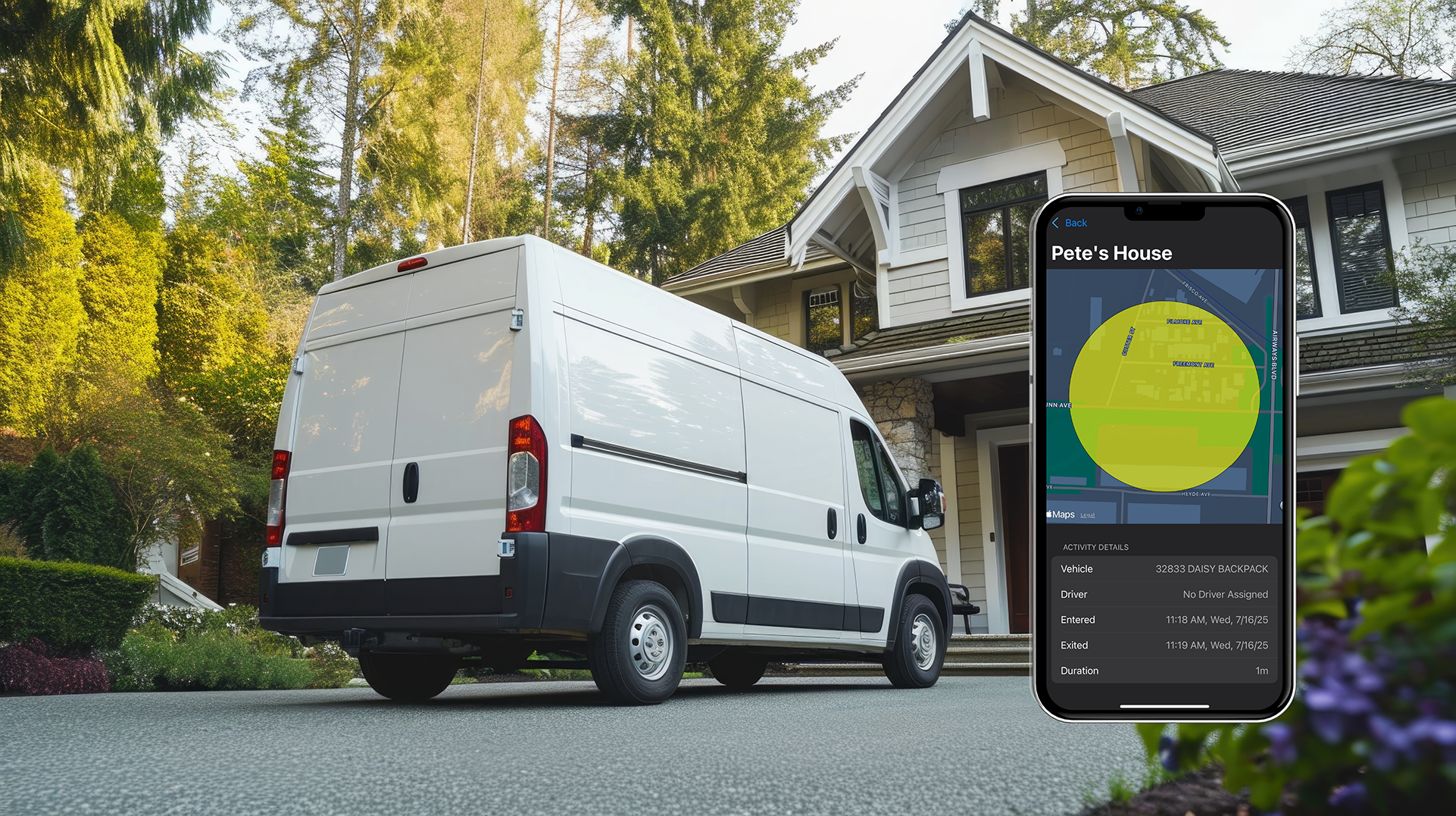
Geofencing uses a vehicle's real-time location to trigger an action whenever it crosses the digital boundaries you draw on a map. Logistical tasks that used to require a phone call or a manual update now happen in the background:
- Automated timecards: When a van enters a geofenced area like a customer's driveway, the clock starts. When it leaves, it stops. This confirms arrival times for billing and prevents manual check-ins from eating up fifteen minutes of every hour.
- "Did we finish the job?" alerts: One of the biggest HVAC headaches is a technician leaving a job site without closing out the digital work order. Set an alert to notify the office if a vehicle exits a job site geofence while the ticket is still marked "In Progress." Fewer return trips, less missed paperwork.
- Yard protection: Geofence your equipment yard and get an immediate alert if a truck moves at 2:00 AM or if someone enters the gate on a Sunday when no one is scheduled to be there.
What Routing Is Actually Costing You
HVAC vans are mobile warehouses. They carry compressors, refrigerant tanks, and bulky equipment across town every day. That load puts real strain on brakes, tires, and suspension, and the wear compounds fast when routing is inefficient.
Not all territories are equal. A tech covering a dense downtown area might drive 20 miles a day. A rural tech clocks 150. When you draw geofences around those specific regions, you get a clearer picture of what each vehicle is actually absorbing:
- Maintenance on actual mileage, not guesswork: If a tech's territory covers a large rural area, they hit oil change intervals faster than the city crew. Tracking actual mileage against territory means you catch service needs before a van ends up in the shop during your busiest week.
- Driver behavior tied to territory stress: When techs are rushed during peak season, aggressive driving spikes. Geofencing paired with driver behavior alerts shows you if a tech is hard-braking every time they pull into a job site. Catching that early keeps your team safer and keeps you from replacing rotors more often than you should.
The routing decisions you make every dispatch window add up. A few extra miles per tech per day, compounded across a busy summer, is a number worth knowing.
The Bottom Line
Geofencing takes the "where are they?" out of the conversation so you can focus on how many jobs your team can handle each day. And by tracking how your vehicles actually move through their territories, you shift from hoping a van holds up through August to knowing exactly when it needs attention.
If you want to see how this fits your dispatch setup, Linxup's team can walk you through a configuration built for HVAC operations. Contact us today to learn more.
Frequently Asked Questions
What is geofencing for HVAC dispatch? Geofencing for HVAC dispatch is a system that draws virtual boundaries on a map around job sites, customer properties, and your yard. When a tech's vehicle crosses one of those boundaries, the system logs it and can trigger an alert or automate an update. Dispatchers get live location data without making a single check-in call.
How does geofencing reduce fuel costs for HVAC companies? By showing dispatchers which tech is physically closest to an incoming job, geofencing removes the guesswork from routing decisions. Sending the nearest available tech instead of whoever was last on the phone cuts unnecessary drive time, which reduces fuel spend and gets more jobs completed in a day.
Can geofencing help with technician time tracking? Yes. When a vehicle enters a geofenced job site, the system automatically starts a time log. When it exits, the log closes. This replaces manual time entry, reduces disputes over arrival times, and gives you accurate data for billing and payroll without relying on your techs to remember.
Will technicians push back on geofencing? Some will, initially. The most effective approach is to explain what it does for them: it proves they showed up when a customer disputes it, it eliminates the end-of-day scramble to fill out time cards, and it cuts down on the check-in calls interrupting their work. When it protects them as much as it informs you, most techs come around.
How does territory tracking connect to fleet maintenance? Different territories put different levels of stress on vehicles. A rural tech driving 150 miles a day hits maintenance intervals much faster than a city tech driving 20. Geofencing territories gives you mileage data by route so you can schedule maintenance based on actual wear rather than a generic calendar interval.
Does geofencing work for after-hours equipment security? Yes. Setting a geofence around your yard or a job site where equipment is left overnight means you get an immediate alert if something moves outside those boundaries outside of business hours. For HVAC companies leaving equipment at multi-day job sites, that's a straightforward theft deterrent.