

Quick Breakdown
-
Track vehicles, crews, and equipment in one place to keep restoration jobs moving during hurricane season.
- GPS and asset tracking help teams find equipment faster, improve utilization, and dispatch the closest crew to new calls.
-
Location, route, and equipment records provide documentation that can help support billing, insurance claims, and customer disputes.
Restoration companies don’t get an off season. One major storm can turn into months of catastrophe work, with crews, trucks, and equipment scattered across multiple job sites at once.
NOAA's 2026 outlook calls for up to 13 storms with winds of 39 mph or greater, with two to six having the potential to reach hurricane strength. While this is below-normal activity, it doesn’t mean it will be an easy season. Even a single landfall event can shift work into overdrive, with dozens of vehicles and thousands of dollars of equipment on the move at the same time, and a dispatcher trying to keep track of it all.
What changes for restoration crews when a catastrophe hits?
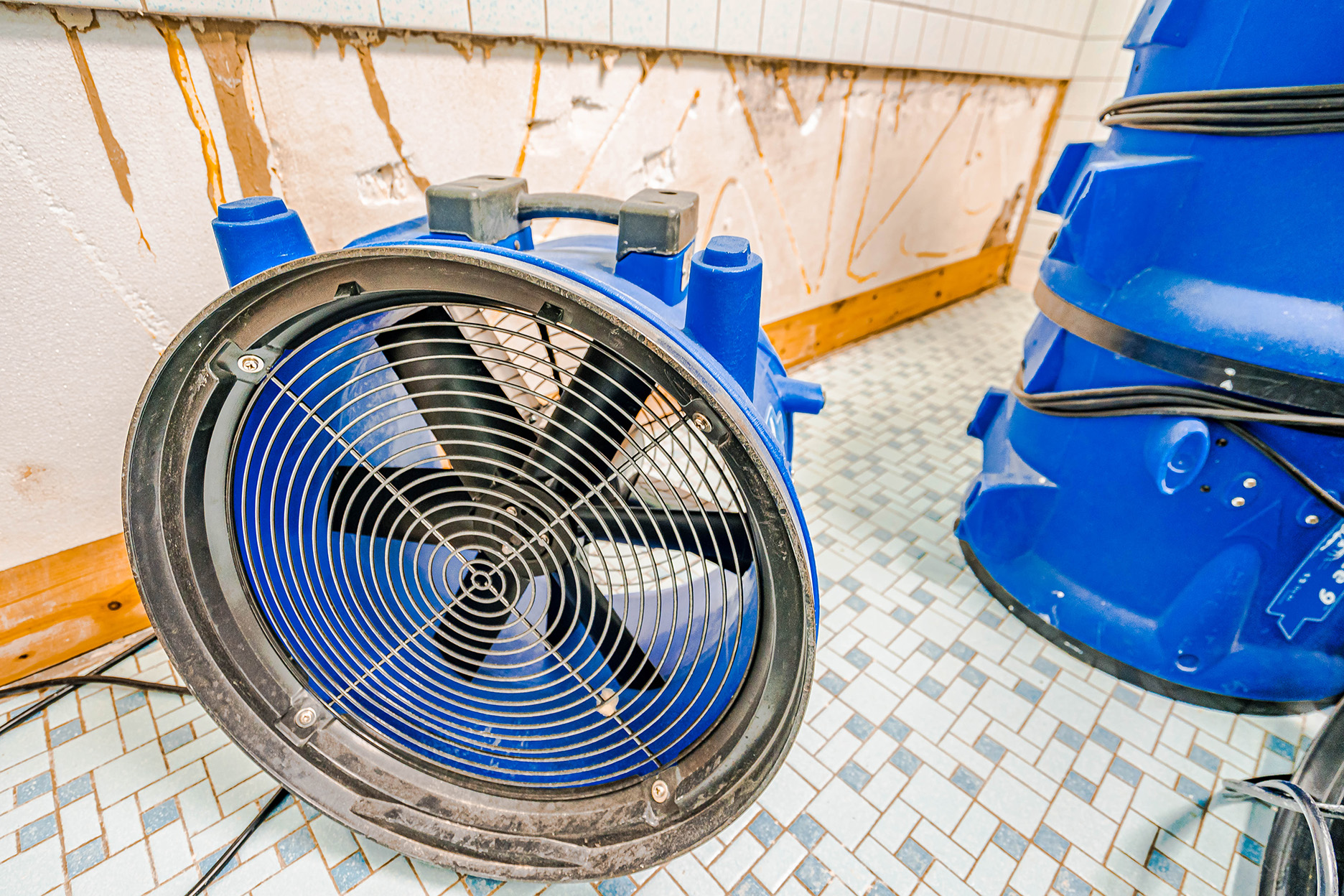
That scramble can quickly move normal restoration operations to all hands, and equipment, on deck. It immediately rearranges priorities and reroutes job assignments. Equipment stays on site until the dryout is complete, vehicles are constantly moving, and on-site crews can change job assignments mid-shift to keep up with demand. All this makes it challenging to track every dehumidifier, air mover, generator, and extraction unit, all of which are critical to completing the work.
The restoration cycle happens in phases, each with different demands for crews and equipment:
-
0-72 hours (emergency response): Immediately after a storm, customers need emergency stabilization. This includes boarding up or tarping roofs, windows, and doors to avoid additional damage, shutting off electrical and gas utilities, and locating a safe place to stay. Restoration companies that can respond quickly and document the damage while also educating customers on the process are more likely to win the jobs.
-
Days 3-14 (structural drying, demolition): Once the immediate dangers pass, crews need to dry out the structures, remove damaged materials, and sanitize affected areas before mold sets in. The IICRC S500 standard notes that moisture past 24 to 48 hours is a mold risk, so this is a race against the clock. Crews that document moisture readings and keep customers updated on drying progress build trust for the bigger job that's coming.
-
Weeks 2-8 (mold, pack-out, estimates): Mold assessment and remediation, pack-out, contents cleaning, and insurance estimates all fall in this timeframe. Customers can expect conversations with adjusters and contractors as they try to coordinate next steps. Restoration companies that can help translate insurance language and keep the paperwork moving will make the process easier for customers.
-
Months 2-12 (reconstruction): This is where the rebuilding happens, including new drywall, flooring, cabinetry, roofing, etc. Major damage reconstruction can take up to 12 months depending on material availability and job scheduling. For restoration companies, this phase requires the most project management for both teams and tools.
And while the pace may change throughout these phases, the need to know where people and equipment are doesn’t.
Vehicles, tools, and equipment belong on the same map
Vehicle tracking is only part of the picture for restoration companies. Labor shortages add another challenge. When companies can’t simply add more people during a busy catastrophe season, existing crews need to make the most of every hour. That means spending less time tracking down equipment, calling drivers for locations, or driving back to a job site to answer a question that better data could have answered from the office.
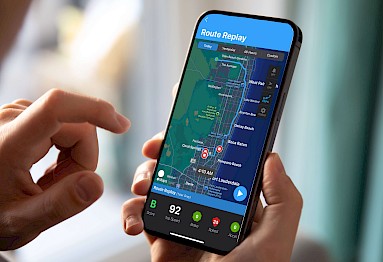
During catastrophe work, dispatchers also need to know where crews and equipment are so they can make faster decisions as new calls come in. Instead of calling around to find the closest crew, dispatchers can use GPS tracking to see vehicle locations, identify who is nearby, and give customers a more accurate ETA. When every minute matters, that visibility can help get the right crew to a new loss faster.
Equipment tracking is also vital to keeping jobs moving. Restoration equipment can sit at a job site for days or weeks while vehicles and technicians move on to other work. Asset trackers make it easier to see where high-value equipment is located without relying on spreadsheets, phone calls, or someone remembering where it was dropped off.
Fast, strategic dispatch depends on having live vehicle and equipment data available in one place. When a project manager can pull up a single map and see that the air movers on a Tuesday job are still running, that the generator from last weekend’s loss is sitting in a customer’s driveway across town, and that the truck heading to the next call is 12 minutes out, the operationable picture becomes much clearer.
Equipment doesn’t have to be stolen to go missing
Generator, dehumidifier, and extractor theft gets plenty of attention because of the equipment’s portability and high resale value, and it’s a very real concern. But equipment can also go missing without anything malicious happening. As jobs ramp up, equipment gets forgotten on job sites rather than stolen from them. Tools and small equipment get left behind at one site, picked up by another crew the next day, transported to a different job, and never make it back to the warehouse. Multiply that across dozens of jobs sites and suddenly no one can account for tens of thousands of dollars in inventory.
Asset and tool tracking can help restoration companies keep tabs on equipment as it moves between crews, vehicles, warehouses, and customer sites. Instead of calling around asking who last saw a particular unit, teams can check its location and get back to work.
Better equipment visibility can also help companies understand utilization. If equipment is sitting unused at a completed job, it can be brought back into rotation sooner. If a unit was deployed for a specific number of days, those records can also help support more accurate billing.
For restoration companies trying to handle more work without buying more equipment, knowing what they already have and whether it is actually being used can make a big difference.
Better documentation makes insurance conversations easier
Completing a restoration job is only half the battle. Once the invoices go out, the back-and-forth with insurance companies begins. Questions can come up weeks later about how long a crew was on site, when the work happened, or how equipment was used. Without clear records, answering those questions can be a very manual and time-consuming process. This turns into delayed payments and shrinking margins.
GPS and telematics data can create a clearer, more reliable record as the work happens. Time-stamped arrival and departure records can help verify when crews were at a property, route history can show where vehicles traveled, and equipment data can help document when and where assets were deployed.
For restoration companies working federal disaster declarations through the FEMA Disaster Response Registry or SAM.gov advance contracts, documentation can become even more important. Crews may need records showing where teams were working, when they arrived, what equipment was deployed, and how long it was used.
That gives restoration companies something concrete to reference when a customer, adjuster, or carrier questions an invoice.
It can also help with other disputes. If a customer says a technician wasn’t on site during the hours billed, location records can help verify the visit. If a company vehicle is involved in an accident, dash cam footage and vehicle data can provide additional context about what happened, so there’s documentation ready when someone asks for proof.
How should restoration companies prepare before hurricane season?
Restoration companies don’t need to overhaul their entire operation ahead of the first storm. A few systems can make it much easier to manage the surge when calls start coming in.
Start with visibility across the things that are hardest to manage during a catastrophe:
-
Know where every vehicle is. Live GPS tracking can help dispatchers find the closest available crew without adding another phone call to an already busy day.
-
Track high-value equipment. Set a dollar threshold and add asset or tool trackers to the equipment that would be costly or disruptive to lose.
-
Create a process for moving equipment. Decide how teams will document when equipment is deployed, transferred to another job, or returned to the warehouse.
-
Document every job as it happens. Arrival and departure times, routes, equipment deployment, and other activity records are much easier to capture now than recreate weeks later.
-
Prepare for federal work. Companies planning to respond to federally declared disasters should make sure their SAM.gov registration and Disaster Response Registry information are current before hurricane season.
-
Review driver safety. GPS data, driver behavior monitoring, and dash cams can help companies identify risky driving habits and create better documentation if an accident happens while crews are on the road.
The best time to figure out how to track a missing generator isn’t when 30 jobs are already underway. It’s during the slow season, when there’s time to check and test processes and make sure crews are ready when hurricane season hits.
Stay ready when the forecast changes
No hurricane outlook can tell restoration companies exactly where the next major storm will hit or how much work it will create. What companies can control is how prepared they are when it happens.
Knowing where vehicles, crews, tools, and equipment are gives dispatchers and project managers a clearer picture of the entire operation. It can help crews respond faster, keep expensive equipment in rotation, reduce unnecessary trips, and create better records for customers and insurance claims.
When hurricane season sends work into overdrive, that visibility can make a complicated operation much easier to manage.
FAQs
How can restoration companies track equipment across multiple job sites?
Restoration companies can use GPS asset and tool trackers to see where equipment is located as it moves between job sites, vehicles, crews, and warehouses. This makes it easier to find equipment without relying on spreadsheets, phone calls, or employees remembering where it was last used.
What equipment should restoration companies track during hurricane season?
Restoration companies should prioritize high-value, portable, and frequently moved equipment that would be costly or disruptive to lose. This can include generators, dehumidifiers, air movers, extraction units, air scrubbers, moisture meters, and other tools used across multiple job sites.
How can GPS tracking help restoration companies respond faster after a hurricane?
GPS tracking gives dispatchers a live view of vehicle locations so they can identify the closest available crew when a new call comes in. Instead of calling drivers for their locations, dispatchers can quickly assign jobs and provide customers with more accurate ETAs.
Can GPS and asset tracking help restoration companies document work for insurance claims?
Yes. GPS and telematics can provide time-stamped arrival and departure records, route history, and equipment location and usage data. These records give restoration companies documentation to reference if a customer, adjuster, or insurance carrier questions an invoice or work completed.
How should restoration companies prepare their fleets and equipment for hurricane season?
Before hurricane season, restoration companies should make sure vehicles and high-value equipment can be easily located, establish a process for tracking equipment as it moves between jobs, and create a consistent way to document job activity. Companies should also review driver safety processes and make sure any registrations needed for federal disaster work are current.
This article expands on insights originally shared by Linxup founder and chief product officer Naeem Bari in Restoration & Remediation Magazine about how better fleet visibility, equipment tracking, and documentation can help restoration companies prepare for hurricane response.