


Quick Breakdown
- You can't control gas prices, but idling, poor routing, aggressive driving, and skipped maintenance are costing your fleet real money every week — and all of them are fixable.
- GPS tracking makes the biggest fuel wasters visible — idle time by driver, route efficiency, after-hours use, and driving behavior — so you have something concrete to act on.
- Fleet fuel management is a routine, not a one-time fix. A short weekly and monthly review cycle catches waste before it becomes a habit.
Fuel is one of the biggest costs in running a fleet. And depending on when you're reading this, it may be getting bigger.
Gas prices swing hard and fast. A spike of a dollar or more per gallon can hit in a matter of weeks, and it lands directly on your bottom line. Analysts rarely agree on where prices are headed, and waiting for a better market isn't a business strategy.

You can't do anything about what gas costs. But you can control how much your trucks burn. And for most service fleets, there's more waste baked into daily operations than most owners realize.
That's what fleet fuel management is about, not waiting for prices to drop, but tightening up the things you can actually fix to cut costs.
Why fleet fuel costs are hard to control (and what you can control)
Crude oil markets, refinery output, and seasonal demand are all things you have no influence on. The price on the sign at the gas station is what it is.
What you can control is consumption. The problem is that fuel waste rarely shows up as one big number. It's death by a thousand cuts: a driver idling 90 minutes between jobs, a truck sent across town when a closer one was available, tires that have been low for two months. None of it shows up as a line item. It just quietly inflates your fuel bill every week.
Fleet fuel management means making those leaks visible and building habits that deal with them before they add up.
The biggest fuel wasters in a service fleet
Here's where the money actually goes:
Idling
An idling engine burns about 0.8 gallons per hour. One truck idling an hour a day costs over $1,000 a year at current prices. Across 10 trucks, that's $10,000, and it bought nothing.
Inefficient routing
Every extra mile costs fuel. If jobs get assigned without knowing where trucks are, you're probably running more miles than necessary. Even 5 to 10 wasted miles per truck per day add up fast over a busy season.
Aggressive driving
Hard acceleration, hard braking, and high speeds all burn more gas. Driving 75 mph instead of 65 cuts fuel economy by at least 15%. Drivers usually aren't trying to waste fuel. It's just a habit nobody has flagged yet.
Skipped maintenance
Underinflated tires reduce fuel efficiency by up to 0.2% per PSI drop. A dirty air filter, an overdue oil change, and worn spark plugs all quietly drag down MPG on every run. A truck that isn't running right burns more fuel than it should.
Unauthorized use
Vehicles running after hours for non-business reasons are burning fuel with nothing to show for it. Without visibility into when and where trucks are moving, it's hard to catch.
How GPS tracking supports fleet fuel management
Most fleet owners have a gut sense of where their fuel is going. The problem is you can't fix what you can't see clearly. GPS tracking gives you actual numbers to work with.
Idle reduction
GPS tracks idle time by vehicle and driver. When you can see that truck 4 logged 3.5 hours of idle time on Tuesday, you have something real to act on. Set idle alerts. Review the numbers weekly. Talk about it with your crew. Idle time drops when drivers know it's being tracked.
Route efficiency
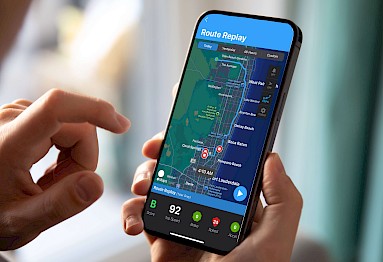
Live location lets dispatchers send the closest truck instead of guessing. Historical route data shows where trucks are taking longer paths than needed. The miles get shorter over time, and that shows up in your fuel spend.
Unauthorized use
After-hours movement alerts tell you when a vehicle is running outside scheduled hours. Geofencing flags when a truck leaves a defined area unexpectedly. It's not about distrust; it's about knowing your equipment is where it's supposed to be.
Driver behavior
Speed and hard-braking reports give you something specific to use when you're talking to a driver. Showing someone their own data, like 14 hard braking events last week, average highway speed 72 mph, lands differently than a general reminder to slow down. Drivers respond better to facts than to lectures.
How to benchmark your fleet's fuel consumption
Before you can manage fuel costs, you need to know where you actually stand. A lot of fleet owners skip this and make decisions based on gut feel.
Start with MPG by vehicle. Pull the last 90 days of fuel and mileage data for each truck. Calculate average MPG. The trucks burning significantly more than the rest of your fleet are your first target, and it's usually a maintenance problem or a driver behavior issue.
| Don't use fuel cards yet? You can still do this manually. Keep a simple log: fill-up date, gallons pumped, and odometer reading for each truck. Divide miles driven by gallons used. It takes 10 minutes a week and gives you the same baseline. A spreadsheet works fine until you're ready to automate it. |
Compare similar vehicles. A 2020 cargo van and a 2020 pickup running similar routes should have similar MPG. If one is well below the other, dig in.
Track idle percentage. GPS platforms can report idle time as a share of total engine-on time. A reasonable target for most service fleets is under 20%. If you're seeing 35% or higher, that's the first place to focus.
Be skeptical of manufacturer specs. Published MPG numbers are best-case. Real-world fleet MPG typically runs lower depending on load, terrain, and driving habits. What matters is whether your numbers are improving over time, not whether they match the sticker.
Set a baseline, then check back. Once you have your average MPG, idle rate, and miles per job, you have something to measure against. Run the same numbers 90 days later. That's the whole game, having a feedback loop, not a one-time fix.
Building a fuel management routine
The owners who keep fuel costs in check don't do it with a big initiative. They do it with a short routine that runs every week and month.
- Weekly: Check idle time by driver. Flag anything that stands out. Have a quick conversation if needed.
- Weekly: Look for after-hours vehicle movement. Deal with it the same week.
- Monthly: Pull MPG by vehicle. Any trucks trending down need a look.
- Monthly: Review driver behavior scores. Use them for coaching, not discipline.
- Quarterly: Compare average MPG and fuel spend to the prior quarter. Look for trends.
- Ongoing: Stay on top of preventive maintenance like tire pressure, oil changes, and air filters. It's not fancy, but it pays.
The point isn't to be perfect. It's to be consistent. A fleet running this kind of regular review catches waste before it becomes a habit, giving you real numbers to back you up when fuel spend comes up in conversation.
What a $1.00/gallon price swing costs your fleet
If you run 10 service trucks averaging 100 miles a day at 20 mpg, your fleet burns about 50 gallons a day. At a $1.00/gallon increase, a realistic swing in either direction, the math looks like this:
| Fleet size | Additional annual fuel cost at +$1.00/gal |
| 10 trucks | ~$18,000 per year |
| 20 trucks | ~$36,000 per year |
| 50 trucks | ~$91,000 per year |
That's real money leaving your business every week during your busiest season. The fleets that come out ahead aren't waiting for prices to drop. They're running tighter, and it pays off regardless of what gas costs.
Frequently asked questions about fleet fuel management
What is fleet fuel management?
Fleet fuel management is the practice of tracking and reducing how much fuel your fleet burns. It covers driver behavior, maintenance, routing, idling, and unauthorized use, which are the variables you can actually do something about, regardless of what gas costs.
How much fuel can a small fleet realistically save?
It depends on your starting point. Fleets with high idle rates, poor routing, or skipped maintenance often see 10 to 15% savings within the first few months of actually tracking and addressing the issues. On a 10-truck fleet spending $80,000 a year on fuel, that's $8,000 to $12,000 back.
Does GPS tracking actually reduce fuel costs?
The tracking by itself doesn't do much. The data has to be used. But GPS makes the biggest problems visible — idle time, routing, after-hours movement, driving behavior. When you review that data regularly and act on it, fuel spend drops. The system creates accountability; the accountability changes behavior.
What's a normal idle rate for a service fleet?
There's no hard rule, but most fleets aim for under 20% of total engine-on time. If you're above 30 to 35%, look at driver habits, long gaps between jobs, or a dispatching issue.
How do I know if my fleet's MPG is a problem?
Start by comparing trucks of the same make, model, and year running similar routes. If one is running 15 to 20% lower than its peers, there's usually a maintenance problem or a behavior issue behind it. Track your fleet average quarter over quarter. A slow decline is almost always a signal worth following up on.
What's the fastest way to cut fuel costs?
Idle reduction. It's direct, it's measurable, and most fleets haven't tracked it at all before they start. Set an idle alert, check the numbers weekly, and talk to your drivers about what you're seeing. Most fleets see idle time drop within a few weeks once people know it's on the radar.
Start with what you can see
Gas prices will do what they do. Your job is to make sure your fleet isn't adding waste on top of it.
The owners who keep fuel costs under control aren't doing anything complicated. They know their numbers, they check them regularly, and they catch problems before they turn into habits. GPS tracking puts idle time, route data, and driving behavior in front of you so you're not guessing. Maintenance alerts keep you from burning extra fuel on a truck that just needs air in the tires.
Want to see where your fuel is actually going? Book a free Linxup demo, and we'll walk you through what your fleet data looks like.