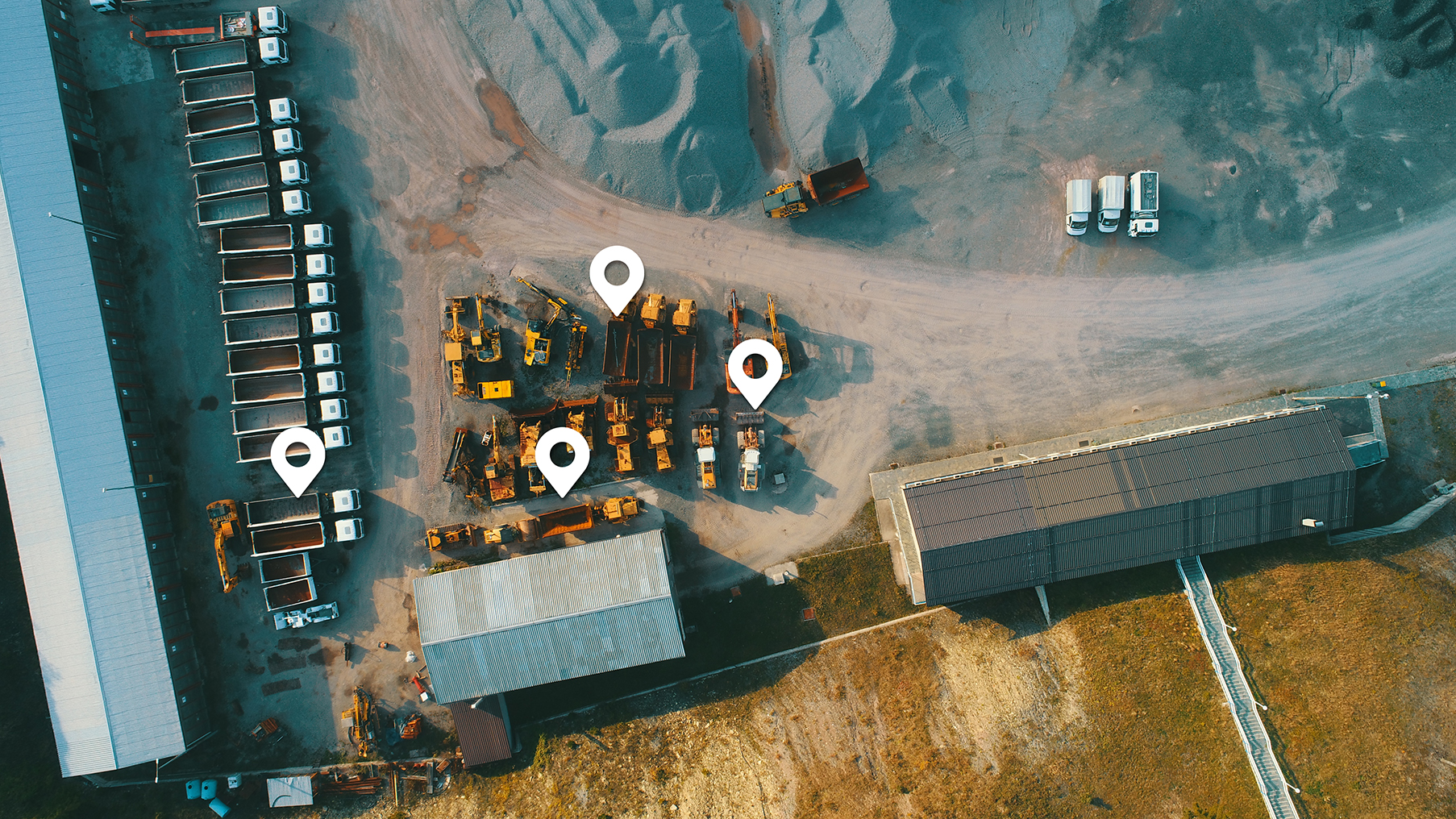


Service businesses tend to be pretty meticulous in tracking and maintaining their service vehicles — they’re crucial assets, after all — but what about trailers?
Without dedicated trailer tracking, the moment a driver unhitches a trailer at a job site it effectively vanishes from your fleet manager’s radar. This invites two major risks:
-
Theft: Trailers are easy targets; a thief only needs a matching hitch ball to hook up and drive off after hours.
-
Wasted time: Teams frequently waste valuable time calling around to find out which job site a trailer was left at, driving up labor costs and putting projects behind schedule.
That's the gap dedicated trailer trackers are built to close.
How is trailer tracking different from vehicle tracking?
Vehicles are powered assets, meaning a vehicle tracker can plug directly into a truck’s onboard diagnostic port and send updates every few seconds as long as the engine runs.
Trailers are non-powered assets. They don’t have a built-in engine to generate electricity, which means a GPS trailer tracking device must rely entirely on an independent power source. Consider which of these common power options (all featured in Linxup’s asset tracking lineup) best fits your specific operational needs:
-
Long-life lithium batteries: These internal batteries can last years without needing a replacement or a manual charge. They achieve this long lifespan by managing how often they send location updates, making them perfect for equipment that sits in remote spots for long stretches.
-
Solar-powered trackers: These devices feature a small solar panel on top of the housing to continuously recharge an internal battery using natural sunlight. As long as the trailer is parked outside with roof exposure, a good solar tracker can run indefinitely.
-
Wired-to-power options: Some trackers can be wired into a trailer's 7-way connector or light system. They draw power and recharge an internal backup battery whenever the trailer is hitched to a running truck, switching back to battery power when unhitched.
Since battery power is limited, trailer trackers don't typically send second-by-second updates like vehicle trackers do. Instead, you choose how often they update to balance visibility with battery life. Some fleets keep it simple with a simple daily check-in just to confirm the trailer is still where it belongs. Others use motion-triggered tracking — the moment the trailer starts moving, the tracker wakes up and sends regular location updates until it stops.
What information can a trailer tracker deliver?
A good trailer tracking system provides four key types of actionable data:
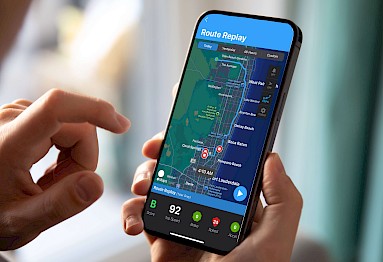
Real-time location and timestamps: See where every trailer is currently parked and exactly when it arrived. Linxup’s interactive map updates automatically, allowing you to instantly verify whether a crew has reached a job site or if a trailer is sitting idle in the yard without having to call around.
Geofence alerts: Draw virtual boundaries around your yard, warehouse, or specific job sites on a digital map. If a trailer crosses that boundary — especially outside of normal working hours — the system sends an immediate text or email notification.
Motion detection: Built-in accelerometer sensors detect unauthorized movement or vibrations after hours. This is crucial for theft prevention; even if a thief hasn't towed the trailer out of a geofenced area yet, the sudden vibrations of it being hitched up will trigger an immediate alert, catching a potential theft in progress.
Location history: Reviewing historical data helps you spot underused equipment and improve crew allocation. By tracking where your trailers have been and how long they’ve sat idle, you can identify assets that are gathering dust on one job site when they could be generating revenue on another.
Who needs trailer tracking (and what kind)?
Construction and Landscaping
Landscaping and construction businesses move heavy equipment trailers, skid steer trailers and large mower trailers between multiple job sites every day. For these fleets, motion-triggered tracking and after-hours alerts are essential. You’ll need a rugged, weatherproof tracker mounted directly to the frame that can handle dust, mud and heavy vibrations while providing immediate alerts if equipment moves unexpectedly.
HVAC and Plumbing
HVAC and plumbing companies frequently use enclosed utility trailers as mobile parts warehouses. These trailers are packed with expensive copper pipes, specialized tools and high-value equipment like commercial boilers or central air units. They are often parked at job sites for days at a time or left at customer locations overnight. A long-life battery tracker or a solar-powered tracker mounted to the roof ensures you always know where your inventory is parked.
Restoration and Remediation
Restoration businesses deploy specialized trailers loaded with heavy-duty dehumidifiers, industrial air movers, and portable generators to properties damaged by water or fire. These trailers are left at loss sites for days or weeks while the damage is sorted.
In this industry, trailer tracking serves a dual purpose. It prevents theft from vulnerable disaster areas, and it provides crucial chain of custody documentation. When filing insurance claims, having a digital log that proves precisely when your equipment trailer arrived at the site and how many days it remained there gives you undeniable proof to support your billing.
What to look for in a trailer tracker
When choosing a commercial trailer tracker, avoid cheap consumer devices and focus on long-term commercial reliability. Look for these features:
-
The right power type: Match the hardware to your workflow. Choose long-life lithium or solar-powered options for equipment left at remote job sites for months, or wired-to-power units for trailers hooked up daily.
-
Covert housing: Ensure the hardware is weatherproof (look for high IP ratings like IP67) to survive rain, snow and high-pressure washes, while being discrete enough to blend into the trailer frame.
-
Custom geofencing: Choose software that lets you map out custom virtual boundaries and set alert rules for specific times of day (like after-hours or weekends).
-
Fast installation: Look for versatile devices that can be bolted, screwed or magnetically mounted to the trailer frame in minutes.
-
A unified platform: This is critical for operational efficiency. Managing trucks, heavy equipment and trailers on separate software platforms creates chaos. Look for a solution that pulls your vehicle tracking and asset tracking into a single, cohesive dashboard — giving you a true bird's-eye view of your entire operation on one screen.
Frequently Asked Questions
How do you put a GPS tracker on a trailer?
Most trailer trackers mount with industrial magnets, heavy-duty adhesive, or self-tapping screws onto a flat metal surface on the frame, tongue, or roof. Once it's secured, you activate it through the software platform.
Can you track a trailer without power?
Yes, you can easily track a trailer without an external power source. Dedicated trailer trackers are engineered with internal batteries or built-in solar panels. They do not need to draw electricity from a truck or an engine. They operate independently, using their own stored power to read GPS coordinates and transmit location data over cellular networks.
What is the best GPS tracker for a trailer?
For trailers that sit outdoors for long periods, a solar-powered tracker is usually the best option because it offers an endless operating life. For trailers that are parked in indoor facilities or covered yards where sunlight is limited, a sturdy tracker with a long-life battery is the ideal choice.
How do I know if my trailer has been stolen?
With a dedicated tracking system, the tracking software can send an immediate text or email notification the moment the trailer moves outside of a designated geofence boundary or when its internal sensors detect unexpected motion during off-hours.
Do I need a separate subscription for trailer trackers vs. vehicle trackers?
While each tracker requires its own cellular connection plan to send data, most commercial fleet management companies bill everything under one monthly invoice, and let you view and manage both your vehicle trackers and your trailer trackers from the same dashboard.
How do I hide a GPS tracker on a trailer so it can't be found by a thief?
Excellent spots include the underside of the main frame rail, inside the structural channels of the tongue or tucked behind toolboxes and spare tire mounts. For enclosed utility trailers, mounting a low-profile tracker flat on the roof makes it invisible from the ground while giving the device a clear view of the sky for optimal GPS signals.
Can I track a trailer in a dead zone or rural area?
Yes. If a trailer loses cellular coverage, most trackers store the GPS data internally and upload it as soon as the signal comes back. You won't lose the trail, just the real-time updates while it's out of range.
What happens if the trailer battery dies?
The fleet software monitors battery levels constantly and will send you a low-battery alert long before the device runs out of power. If you use a long-life lithium tracker, you will receive a notification months in advance telling you it’s time to swap the unit or replace the battery. For solar units, the battery is continuously replenished by daylight, preventing the device from dying under normal outdoor use.