42 Drowsy Driving Statistics To Pay Attention To
Drowsy driving is more common and more dangerous than many people realize. Fatigue slows reaction time, impairs judgment, and increases the risk of accidents on the road.
As fleets continue to focus on safety, knowing what to look for and where potential dangers lie helps fleet managers take action before serious incidents occur.
Why is drowsy driving dangerous?

Drowsy driving is a sneaky risk on the road. Commercial drivers know better than to risk their jobs and drive under the influence. But research reveals that drowsy driving doesn’t get the same amount of attention — especially among Gen Z drivers — despite similar risks and impacts on driver behavior.
1 in 25 adult drivers has fallen asleep at the wheel.
CDCDrowsy driving is responsible for over 20% of crash-related fatalities.
NSFApproximately 6,400 people die from drowsy driving crashes each year.
NSFGoing 20+ hours without sleep and driving is the equivalent of driving while at the legal limit for blood alcohol concentration.
Occupational and Environmental MedicineThe likelihood of impaired drivers taking no precaution to avoid getting behind the wheel while drowsy is 50%, compared to 11% after a few drinks.
NSF
Driving after only three to four hours of sleep shows similar impairments and crash risk to drunk driving.
NSF66% of men have driven drowsy compared to 54% of women.
NSF60% of adults have driven while drowsy.
NSF
63% of currently employed drivers have driven drowsy compared to 54% of currently unemployed drivers.
NSFPeople who make less than $50K report more illness or medical problems to explain why they’re not able to get enough sleep and drive alert.
NSFPeople who make above $100K annually report travel and social reasons for driving drowsy more than half the time, compared to just 38% of those making less than $50K.
NSF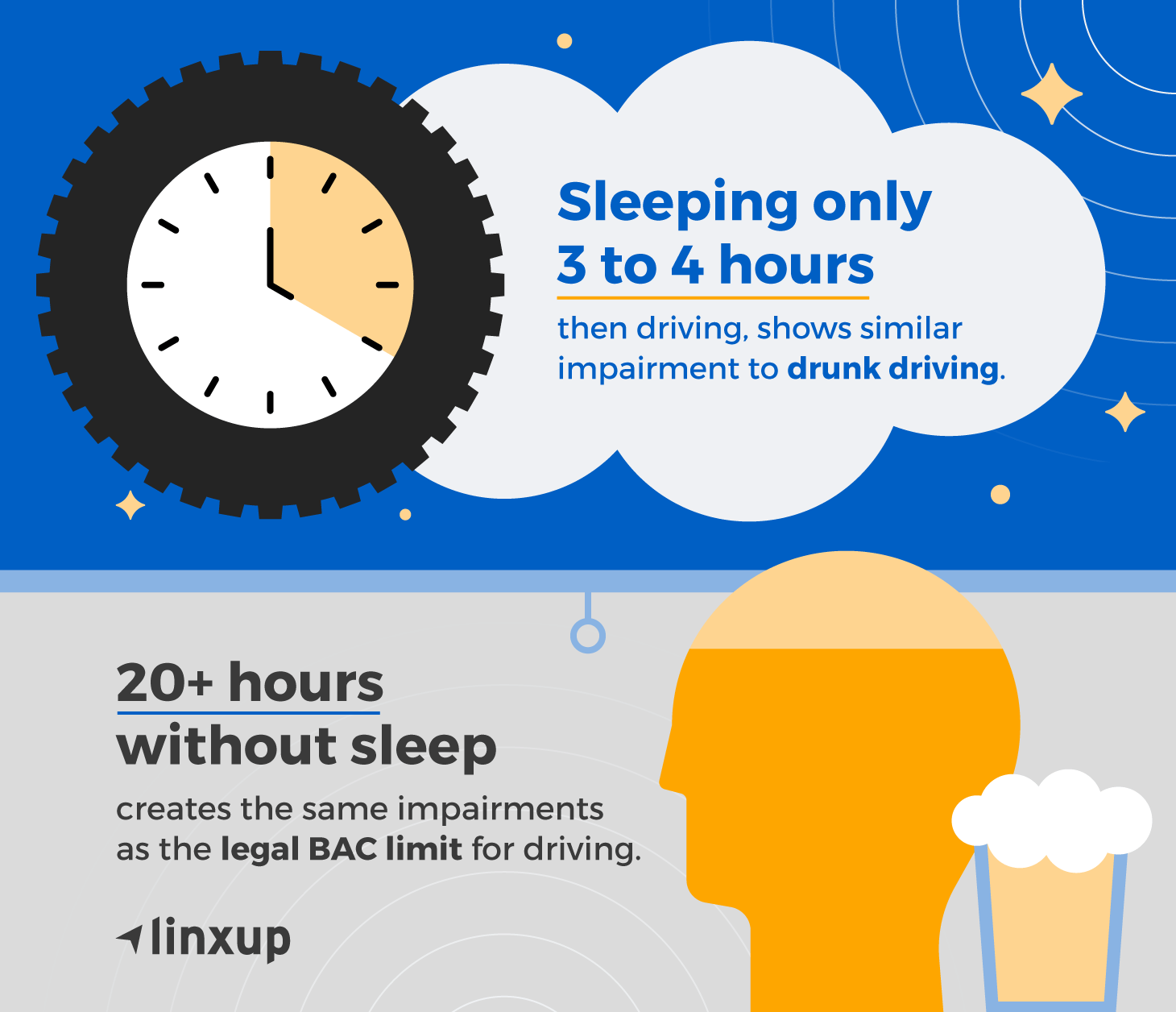
Drowsy driving statistics by state

There's not much research on differences in drowsy driving habits by state, but the statistics below look at general crash and fatality patterns. Many of the characteristics in these types of accidents also apply to drowsy driving crashes, such as single-vehicle crashes with no passengers.
Only two states in the United States have laws that specifically mention drowsy driving: Arkansas and New Jersey.
GHSAMississippi has the highest rate of crash fatalities by population and miles traveled.
IIHSMassachusetts has the lowest rate of crash fatalities by population and miles traveled.
IIHS
Washington, D.C., and Alaska have the lowest number of crash fatalities.
IIHSCalifornia and Texas have the highest number of crash fatalities.
IIHSFive states had no fatalities from large truck crashes in 2023.
IIHSWyoming had the most fatalities from large truck crashes in 2023.
IIHSD.C. and Rhode Island had the lowest number of fatalities from pickups and SUVs in 2023, while California and Texas had the highest.
IIHS
52% of nationwide vehicle crash fatalities in 2023 were from single-vehicle crashes.
IIHSUtah had the lowest fatality rate for single-vehicle crashes at 46% and the highest for multi-vehicle crashes at 54%.
IIHSHawaii had the highest fatality rate for single-vehicle crashes at 71% but the lowest fatality rate for multi-vehicle crashes at 29%.
IIHS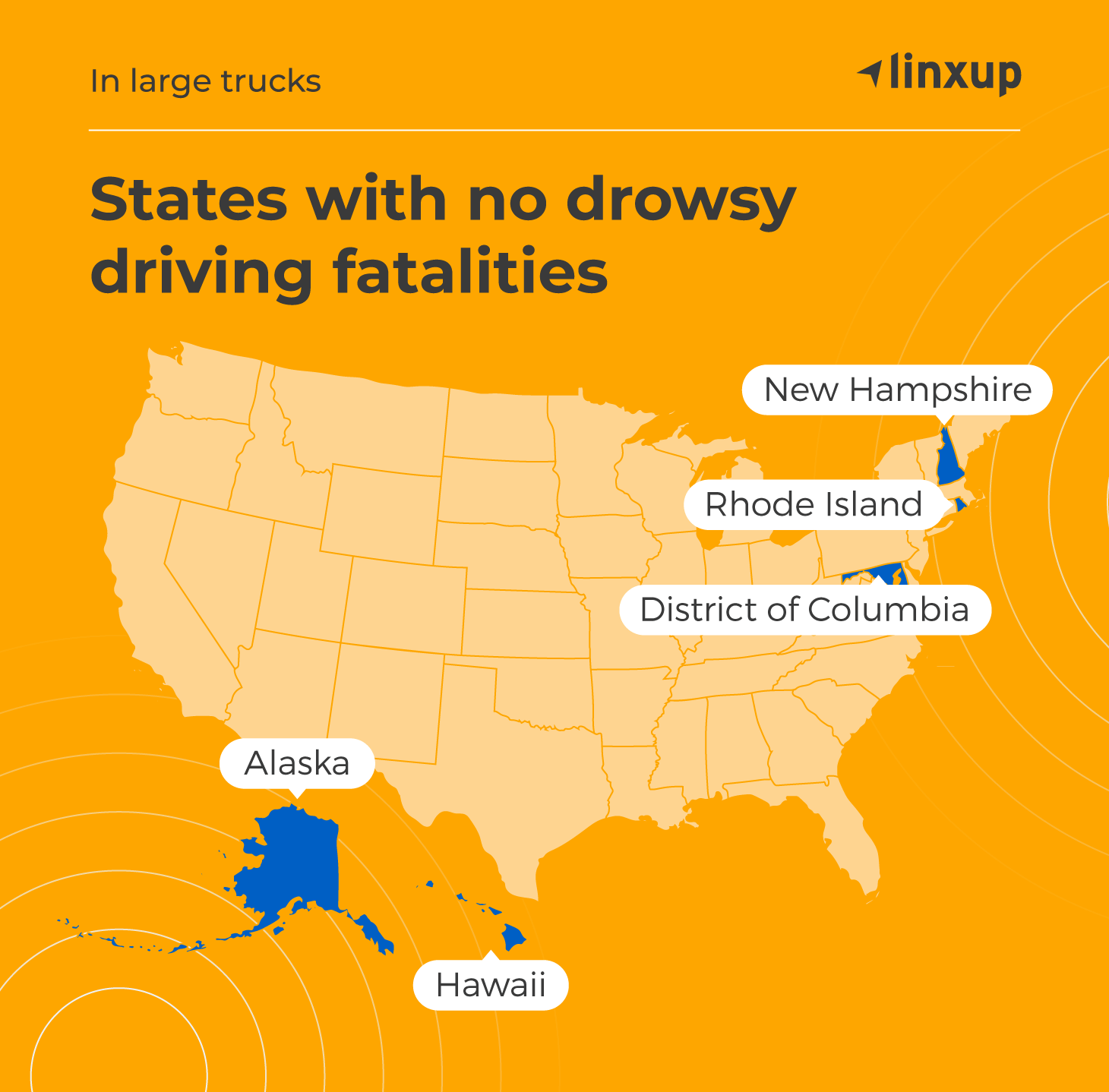
Drowsy driving contributing factors
Drowsy driving is a widespread yet overlooked issue that needs to be taken seriously, especially among fleet managers. Commercial drivers are especially at risk, with a higher risk of sleep disorders, driving alone, shift work, and the sheer number of hours on the road.
Drowsy driving crashes most often involve a single driver running off the road at a high speed with no evidence of braking.
NHTSADrowsy-driving crashes are most likely to happen on highways and rural roads.
NHTSA72% of Americans have told another person that they’re too tired to drive, and 78% have told someone they're too drunk.
NSFMost drowsy driving crashes happen between midnight and 6 a.m. or in the late afternoon.
NHTSATaking a break can help drivers be more alert when they’re drowsy, but the results only last 40 minutes.
Sleep61% of adults with narcolepsy or idiopathic hypersomnia have had an accident or near-miss due to drowsy driving.
SleepChronic fatigue has been shown to impact decision-making in drowsy drivers.
IEEEA break with caffeine is more effective than one without, but it still only improves alertness for a short period of time.
Sleep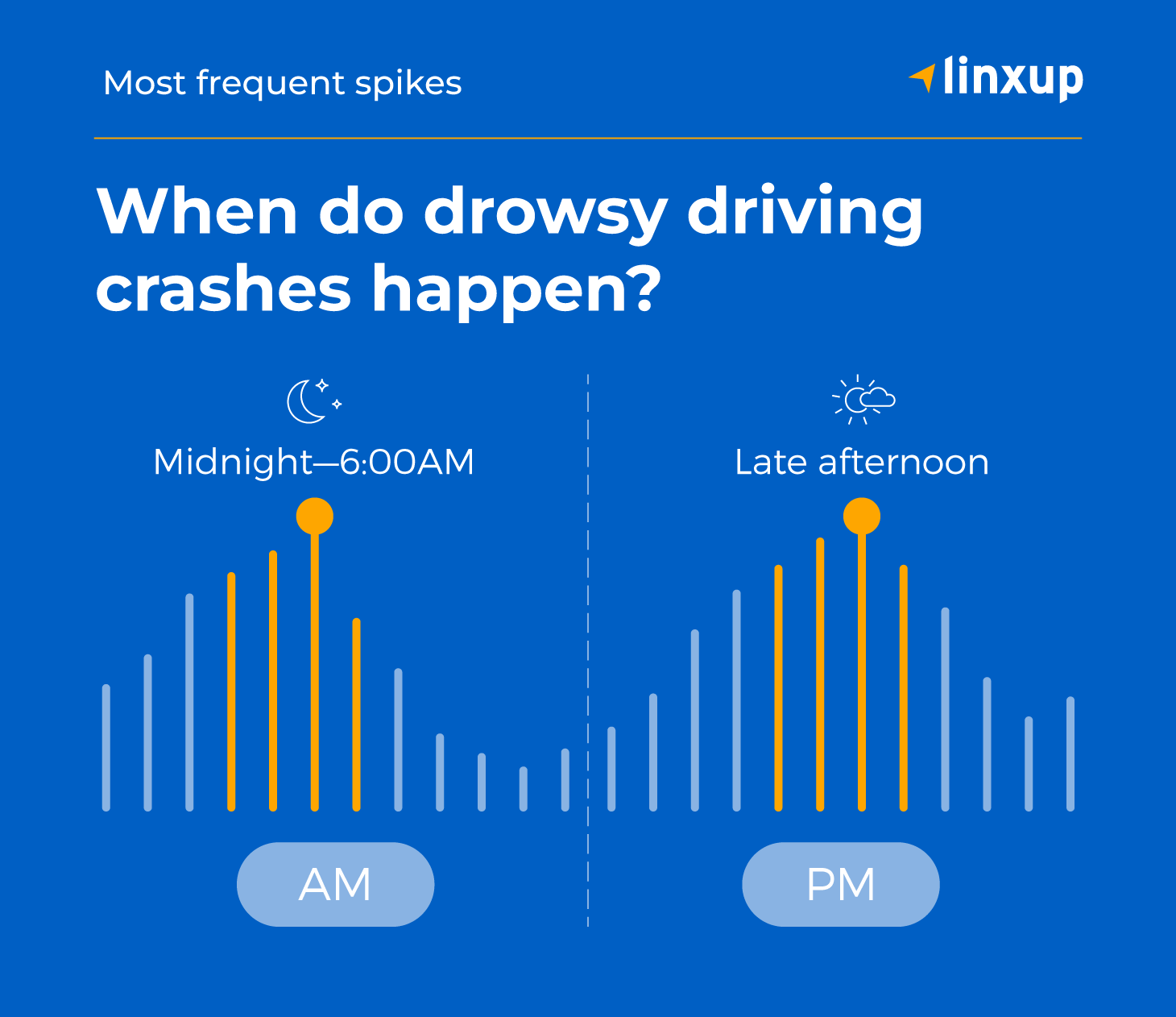
Risks of driving tired
Some seasoned drivers might brush off warnings from fleet managers about drowsy driving. But no amount of experience can overcome a lack of sleep. Fleet managers should build coaching plans for fatigued drivers that help them identify signs they need a break and avoid drowsy driving.
Drivers can travel over 100 yards during the average "microsleep" (a short instance of sleep, spanning a couple of seconds that people don’t even realize is happening) while driving 55 mph.
NSFDrivers ages 18-29 are most likely to drive while they’re tired.
SleepCommercial drivers are at a higher risk of drowsy driving crashes and sleep disorders.
New York State Governor's Traffic Safety CommissionDrivers ages 65+ have the highest risk of serious injury in single-vehicle drowsy driving crashes.
International Journal of Transportation Science and TechnologyThe most common drowsy driving single-vehicle accidents are overturned vehicles.
International Journal of Transportation Science and TechnologyIoT-enabled sensors and monitoring systems have been shown to reduce the risk of drowsy driving crashes.
ARXIV
Both teens and adults think drowsy driving is the least risky activity out of drunk, drugged, and distracted.
NSFMotor vehicle crash fatalities increase by 12% in the five weeks after spring daylight saving time.
IIHSOf the risk factors for drowsy driving crashes, microsleeps are the most difficult to predict.
Sleep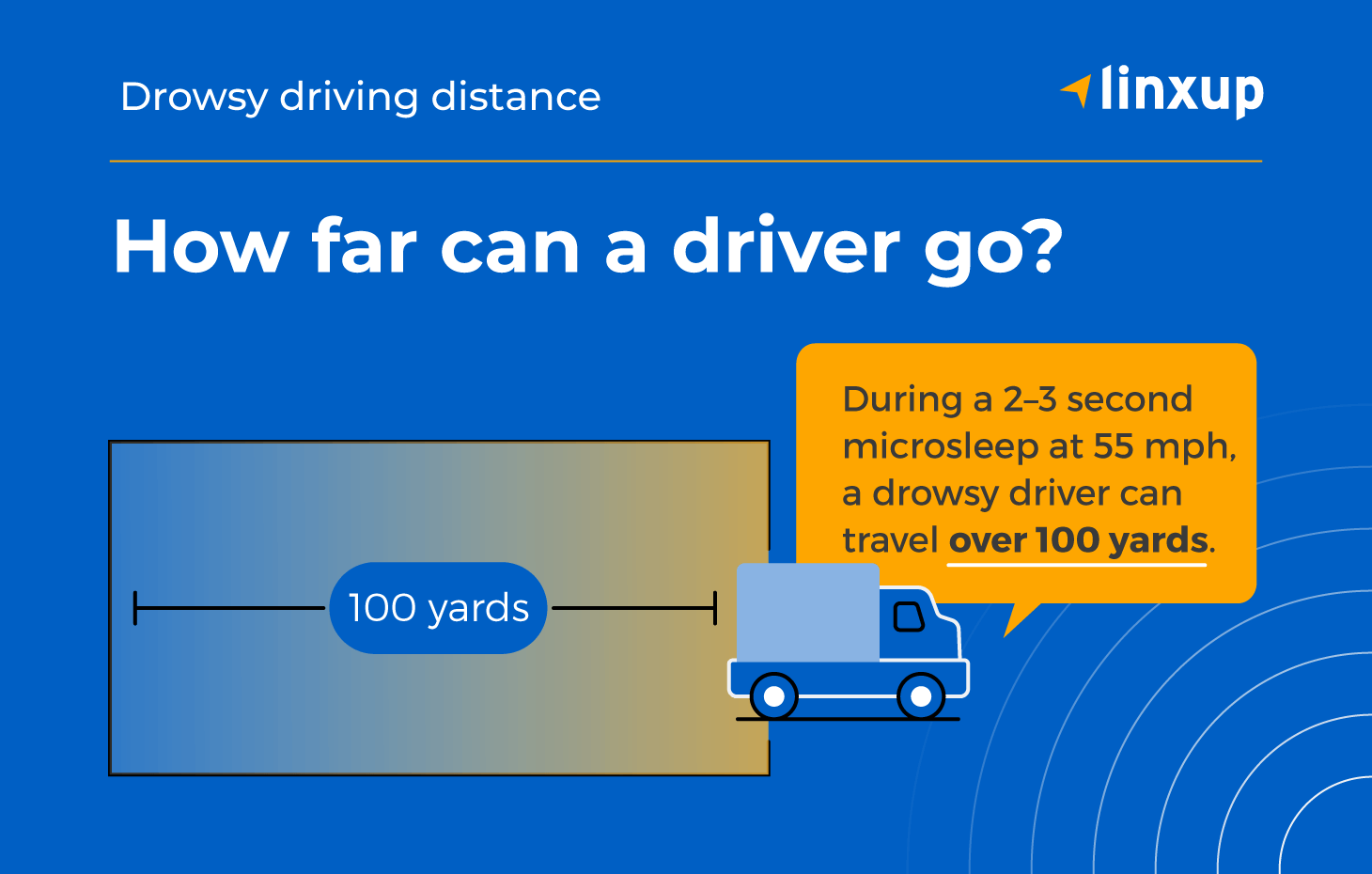
Impacts of drowsy driving

The hard truth is that drowsy driving is a major problem, even if people don’t think it’s as risky as drunk or distracted driving. But the good news is that fleet managers have the power to inform their drivers of the risk and improve company practices to support rested driving.
Up to 20% of large truck or bus crashes in the U.S. involve a drowsy driver.
GHSAThe estimated annual societal cost of drowsy drivers is $109 billion.
GHSA
There are an average of 328,000 crashes each year involving a drowsy driver.
GHSANearly 110,000 crash injuries occur each year due to drowsy driving.
GHSA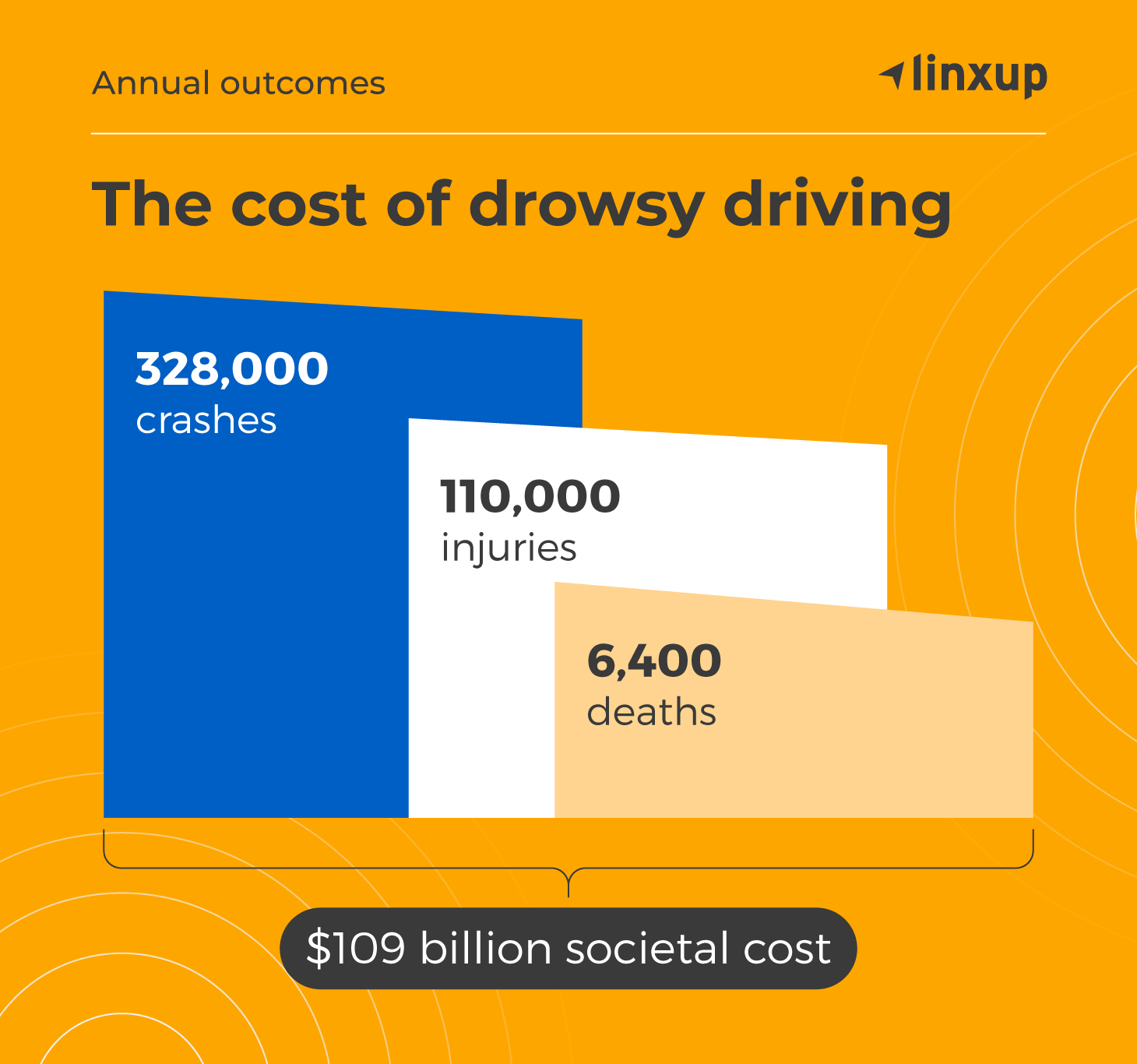
How to avoid driver fatigue
Research shows that both long-term and immediate lack of sleep have negative impacts on decision-making while driving. As a fleet manager, you can track fleet management KPIs and make changes in your business that support driver health and work-life balance.
You can’t follow your drivers home and force rest on them, but you can make it easier for them to take a break and get that well-earned sleep:
- Health and wellness initiatives: Take a 360-degree approach to improve drivers’ overall well-being and support better sleep, such as paid mental health days or a fitness stipend.
- Schedule and enforce regular breaks: Don’t let drivers skip lunch or other breaks, which give them valuable time to recharge, grab a coffee, or nap if they need to.
- Rotate drivers: If shift work is necessary, rotate drivers and give ample time off to rest before they hit the road.
- Use IoT sensors: Telematics systems like Linxup can monitor for driving patterns and flag signs of fatigued driving like brake use, speed, and more.
Keep drivers safe with Linxup
If you had the choice between driving an '80s-style van with no seat belt and worn brakes or a newer, safer model, we bet we’d know which one you’d pick. Supporting well-rested drivers is a similar no-brainer for fleet safety.
Telematics systems, GPS vehicle tracking, and AI-supported dash cams help fleet managers look out for their drivers, spotting risky behavior patterns so they can take action before a driver (or others) get hurt.
Get a demo to see how LinxCam can help you build a better, safer fleet.