

Quick Breakdown
- Most fleets struggle to turn telematics data into consistent action before an incident occurs.
- Exception-based monitoring does the heavy lifting by flagging only what needs attention so managers can focus on coaching and decisions instead of digging through data.
- Safety scores and coaching tools close the loop by setting clear expectations, tracking improvement over time, and making safer driving the standard.
For fleet managers, GPS fleet tracking, dash cams, AI-enabled tools, and telematics are now part of daily operations. This helps them monitor driving behavior, vehicle usage, and what’s happening in the field.
But as fleet managers are assessing their businesses in 2026, many are discovering that basic insights alone aren’t enough. According to our recent survey of over 160 Linxup customers, going beyond basic visibility is where tools like Linxup make the biggest impact and help fleet managers determine what to do next.
When telematics data is used more comprehensively, it can connect safety, maintenance, and operations so fleet managers can make smarter decisions — faster. And when margins are tight, good workers are hard to replace, and a single accident or breakdown can throw off an entire day of jobs, that clarity matters.
What happens when fleet safety, maintenance, and cost finally connect?
For a long time, safety, vehicle maintenance, and cost control management were treated as separate priorities with siloed reporting and budgets. Safety focused on incidents. Maintenance focused on schedules. And financial decisions happened based on merging the latest reports and trying to piece together the whole story after the fact.
Telematics has changed that by bringing those conversations together, giving fleet managers a clearer picture of what’s happening on the road right now and the factors leading up to it. AI strengthens that connection by looking at driving behavior alongside vehicle health and past trends, helping fleets also understand what’s likely to happen next.
The same data that flags risky driving behavior also reveals patterns that impact vehicle health, maintenance costs, and overall fleet efficiency. Hard braking, aggressive acceleration, speeding, and excessive idling don’t just increase accident risk; they also wear down brakes, tires, engines, and transmissions faster and contribute to fuel waste. AI helps surface these patterns earlier, so fleets can address behaviors and vehicle maintenance issues before they turn into breakdowns, missed jobs, or expensive repairs.
When it comes to driving behaviors, AI alerts and monitoring help fleets see fewer preventable incidents, less unplanned maintenance, longer vehicle life, reduced downtime, and a lower total cost of ownership over time.
Can fleet data help spot risks?
Most service-based fleets already rely on GPS fleet tracking and telematics as part of daily operations. Vehicle location, speed, harsh braking, idle time, and engine data are readily available, giving fleet managers visibility into driver behavior and vehicle usage. Dash cams add another layer by providing context, helping explain not just what happened on the road, but why.
Telematics data can do far more than show truck locations or trigger alerts. What many fleet managers are realizing is that AI makes it possible to surface patterns, trends, and risks that would be difficult or time-consuming to identify manually, making it easier to connect safety, maintenance, and operating costs. This matters even more for small and mid-sized service fleets, where every dollar matters and a single accident or breakdown can derail an entire day of jobs or worse — be catastrophic for the business.
Recent Linxup customer survey data reinforces this shift. Four out of five fleet managers say GPS data helps them identify risky driving behaviors, and more than half report fewer safety incidents as a result. Visibility is clearly delivering value.
The challenge is turning that information into consistent, meaningful action. And that’s where many fleets get stuck. More than half of surveyed fleet managers say turning telematics insights into consistent action is their biggest challenge, not collecting the data itself.
The question is no longer whether fleets can see what’s happening. It’s whether they can focus on the highest-risk drivers and vehicles and act before small issues turn into costly problems.
How do you move from reactive monitoring to proactive fleet management?
Many fleets are using AI and telematics data and reporting in a narrow, reactive way. According to Linxup president and co-founder, Naeem Bari, “Today, most fleets are using AI in a fairly narrow, reactive way. The most common use is AI-driven detection through dash cams and telematics, things like tailgating, phone use, and seatbelt violations. That data is often combined with traditional telematics events to help review behaviors and coach drivers, while documenting progress.”
That approach is a necessary first step, but it leaves a lot of value on the table.
In order to be more proactive, fleet managers need to implement exception-based monitoring. Instead of reviewing everything every day, exception-based monitoring continuously watches vehicles and drivers in the background and flags only the events and patterns that actually need attention. Drivers with repeated safety issues surface quickly. Vehicles that miss inspections or show early signs of maintenance risk stand out. And compliance gaps are flagged while there’s time to fix them, before they turn into citations, claims, or downtime.
When an exception appears, fleet managers can review the context, take the appropriate action such as coaching a driver, scheduling vehicle maintenance, documenting a decision, and move on. There’s no digging through endless reports or footage just to find problems.
The fastest gains come from this shift. Instead of staring at endless reports, AI highlights the most important issues, often replacing hours of manual review.
And with that foundation in place, fleets can start to move into the next phase, says Bari.
“With the help of AI, the next phase is insights-based management, where you can act before problems occur rather than reacting after the fact.”
Why does measurement change driver behavior?
Even with better prioritization, fleets face a familiar challenge: drivers and managers need a shared, objective way to understand performance.
Telematics data is powerful, but it still depends on consistent processes and human oversight. Without a clear standard, one manager’s definition of risk may differ from another’s, and coaching can feel subjective. AI helps create that consistency by applying the same standards across drivers, vehicles, and managers. Instead of relying on manual review or individual judgment, AI analyzes driving behavior and video context the same way every time, making performance measurement more objective and repeatable.
Clear measurement brings clarity. When driving behavior and safety data are translated into a single, transparent score, expectations become clearer for everyone involved. Drivers know where they stand and which behaviors affect their score. Managers know where to focus. And progress can be tracked and shared over time instead of debated after the fact.
With the help of AI, the most relevant events and videos are surfaced automatically, so coaching conversations are grounded in clear, fact-based examples drivers can see, understand, and trust.
How do you turn fleet data into real accountability?
Safety scores and leaderboards, like those available in the Linxup dashboard, help fleets close the loop between identifying risk, taking action, and documenting progress. They also help fleet managers move from reviewing everything to exception-based monitoring and eventually, insights-based management. AI will continue to play a key role in that shift by eventually identifying patterns, repeat behaviors, and emerging risks that would be difficult to spot manually.
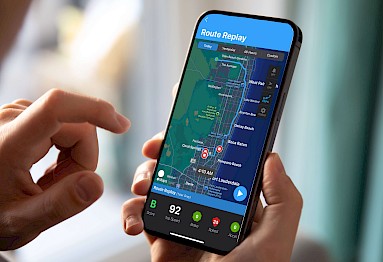
A safety score consolidates key driving behaviors and trends from GPS and dash cam data into a clear, objective metric aligned with a fleet’s safety goals. Instead of reviewing dozens of alerts, managers can quickly identify which drivers are improving, which need coaching, and where risk is increasing. Drivers gain visibility into how their day-to-day decisions affect their score, making coaching conversations more constructive.
Fleet managers consistently report higher driver engagement when safety programs recognize improvement, not just violations. Linxup customers report stronger coaching consistency and measurable improvement when they can see a clear score that can be tracked over time.
By using AI to surface risks, standardize measurements, and prioritize action, safety scores, coaching dashboards, and leaderboards turn data into consistent, defensible accountability.
Together, they help fleets:
- Prioritize coaching based on real risk trends.
- Reinforce positive behavior consistently.
- Track improvement over time.
- Create defensible documentation for audits, insurance reviews, and legal situations.
- Connect safer driving to reduced maintenance costs and downtime.
Where is fleet safety headed next?
Looking ahead, telematics will continue to influence fleet safety, maintenance, and compliance decisions in more strategic ways.
AI is already helping fleets collect, organize, and make sense of large amounts of data quickly enough to spot risk before it turns into a violation, breakdown, or claim. It is also improving how fleets document driver behavior, inspections, maintenance activity, and audits, reducing manual work while creating clearer records.
At the same time, AI is not a replacement for human judgment, says Bari.
“AI should be treated as a trusted companion riding shotgun. It helps surface risks and save time, but people are still responsible for coaching, policy decisions, and accountability.”
The next phase is not about adding more tools. It is about using existing tools more intentionally and building a complete loop. A clear policy. Automated monitoring. Documented action and follow-through.
Fleets that take this approach reduce risk, extend vehicle life, improve compliance outcomes, and free up time to focus on running and growing the business.