


Quick Breakdown
- Demand for home services in 2026 is steady -- driven by aging housing stock, homeowners staying put, and core systems hitting the end of their useful lives.
- The pressure is on the other side: finding enough workers, controlling costs, and keeping up with customer expectations.
- This piece breaks down what's actually driving demand across HVAC, plumbing, electrical, lawn care, and restoration, and what the businesses coming out ahead are doing differently.
Home Services Industry Trends for 2026
Demand for home services in the U.S. is driven by a simple reality: homes age, things break, and mishaps happen. Furnaces quit. Pipes leak. Electrical panels can’t keep up with modern power needs. And lawns don’t care what the economy is doing.
That reality isn’t changing in 2026 — if anything, it’s becoming more predictable as homes get older, homeowners stay put longer, and a list of deferred maintenance keeps growing.
For service businesses that are ready to tackle an aging housing market, a tight labor pool, rising customer expectations, and a wave of new technology, the work is there.
Here’s what’s shaping the home service industry this year.
The U.S. housing market is older than ever
The single most important driver of home service demand is the age of the housing itself. Almost half (48%) of U.S. homes were built before 1980, with an estimated 35% of those homes being built before 1970.
At the same time, housing affordability challenges have pushed the median age of first-time homebuyers to 40 years old — the highest on record — with the median price for a new home reaching $414,400 as of December 2025.
Homeowners are staying put and investing in maintenance
The housing market is essentially at a standstill. Approximately 80% of U.S. homeowners have mortgage rates below 6%, and over 52% have rates under 4%. With home prices and interest rates still historically high, this has created a “lock-in effect,” where homeowners choose to stay put with their low mortgages rather than buy another home at a much higher price.
That means more homeowners are investing in their existing properties instead of moving, creating steady demand across nearly every home service category. Harvard's Joint Center for Housing Studies projects that total homeowner remodeling and repair spending will hit a record $524 billion in early 2026. NAHB economists are forecasting remodeling activity to increase 3% in 2026 and another 2% in 2027, driven by aging housing stock, homeowners choosing renovation over relocation, and a growing population aging in place.
That's money flowing directly to skilled trade businesses — plumbers, HVAC techs, electricians, and restoration crews — not to real estate agents.
What does more home maintenance mean for trades?
Aging housing generates a steady, predictable stream of necessary work. When a heat exchanger fails in a 25-year-old furnace, the homeowner doesn't have the option to wait. When an electrical panel can't safely handle a new EV charger, the work has to get done. Homes built before 1980 are more likely to have issues with roof, basement, wall, or window leaks due to older or original pipes and seals that have had decades to wear, corrode, or crack.
As homes age, their core systems inevitably approach the end of their useful lives:
- Furnaces and air conditioners typically last 15-20 years
- Water heaters last between 10 and 15 years
- Roofs typically need to be replaced every 15-20 years
- Electrical panels installed decades ago often can’t safely handle modern electrical demands
- Plumbing systems corrode, fixtures wear out, and structural components require repair
Much of this work isn’t optional. When a furnace fails or a pipe bursts, homeowners can’t delay service indefinitely; essential maintenance and emergency repairs are expected to stay relatively constant for the foreseeable future.
Trades still face hiring challenges
While demand for trade work is strong, finding enough skilled workers is still problematic — and there are more open jobs than qualified workers available to fill them in nearly every home service industry.
Some of the contributing factors to the all-time high demand for skilled labor are:
Age demographics. The skilled trades workforce is getting closer to retirement. Electricians specifically are experiencing a "retirement cliff” caused by losing about 20,000 electricians a year while still having 80,000 openings. And this trend spans across industries, with the median age for construction workers being 42, and nearly 30% of HVAC technicians over the age of 55.
Negative perception. This trend has been building for years, driven in part by decades of cultural emphasis on four-year college degrees over vocational careers. While the perception of trade work has begun to shift, the pipeline of new skilled workers remains insufficient to fully replace those exiting the workforce. However, as AI technology replaces more jobs, more people are in search of the stable work that trades have to offer.
Training. Virtually all skilled trades require extensive training, apprenticeships, and licensing before technicians can work independently. This creates a time lag between recruiting new workers and realizing their full productivity.
If recruitment and training don't pick up significantly, the gap between demand and available skilled workers won't just affect individual businesses; it will ripple through supply chains, service delivery timelines, and costs across the board. Homeowners wait longer. Jobs take longer to close. Prices go up. Businesses that fail to prioritize this could be jeopardizing their future.
Retention economics. Losing a trained technician can cost $25,000 - $50,000 per lost employee due to recruitment, training, and lost productivity. That’s money many businesses can’t afford to lose. However, competitive pay, a clear career path, and a workplace people want to be a part of lower the risk of turnover for home service businesses looking to retain young workers.
2026 home service trends by industry
HVAC
HVAC remains one of the fastest-growing segments within home services, with more than 425,000 jobs nationwide paying nearly $60K/yr and projected job growth of 8% through 2034.
One of the primary drivers of this demand is replacement cycles. Millions of HVAC systems installed during the housing boom of the early 2000s are now reaching the end of their 15- to 20-year lifespan. That means more calls, more installs, and more customers looking for trustworthy technicians.
Extreme weather is also a contributing factor, as an uptick in heat waves and cold snaps continues to place additional strain on HVAC systems (the NOAA reported 27 separate billion-dollar weather disasters in 2024 alone).
It’s worth noting that there’s a lot of technological innovation happening in the home services space. Modern HVAC systems and homes in general are incorporating upgrades that will potentially increase job values and provide additional service opportunities, including:
- Smart thermostats: The U.S. smart thermostat market was estimated at $2.36B in 2024 and is expected to grow more than 17% annually from 2025 to 2030.
- High-efficiency components: These are quickly gaining traction thanks to improved performance and lower operating costs.
- Integrated air quality solutions: The indoor air quality market (IAQ) is projected to surpass $8B by 2026, fueled by a post-pandemic focus on cleaner, safer environments.
Plumbing
With more than 504,000 jobs nationwide and steady projected growth, plumbing remains one of the most stable home service sectors.
Like HVAC, aging systems are creating consistent demand while smarter tech provides increased opportunities to expand on standard services and repairs.
The new tech toys in plumbing include:
- Tankless water heaters: A more energy-efficient alternative to traditional systems with a market projected to reach $48B by 2033.
- Leak detection sensors: Did you know roughly 30% of treated water globally is lost due to leakage across aging distribution networks? Now you do.
- Greywater recycling systems: Driven by water conservation efforts and the rising demand for eco-friendly building solutions, this is expected to be a more than $2.3B market by 2029.
Electrical
It’s estimated that the shortage of electricians will number roughly 81,000 per year between 2024 and 2034, and that’s despite projections for the number of employed electricians to grow 9 percent over the next decade.
This increased need for electrical experts is pretty straightforward: many older homes require electrical upgrades like panel replacements, rewiring, and safety improvements simply to support modern power demands.
Additionally, several of today’s trendy home upgrades require electrical know-how for safe installation:
- Smart home systems: An estimated 1 in 5 homeowners worldwide own at least one smart home device (in the U.S. alone, 80% of adults reportedly own a Smart TV). Many of these devices require proper wiring, panel upgrades, or network integrations that require a professional.
- EV home charging stations: A market that’s been accelerating fast for over a decade. Level 2 home chargers are the standard for daily, fast home charging and require a 240V circuit, which means a licensed electrician is a must.
- USB wall outlets: These are already popular and expected to double in market size by 2031. Swapping out home outlets safely requires working inside the panel and meeting code requirements — which can vary based on the municipality.
- Automated lighting: Yet another market projected to double in the years ahead to more than $55B. Whole-home lighting automation can require low-voltage wiring, dimmer compatibility checks, and load calculators that go beyond basic outlet work.
- Backup generators: You guessed it — the home backup generator market is expected to go nowhere but up. Standby generator installation requires a transfer switch wired directly to the main panel, one of the more complex tasks for residential electricians.
- Heat pump installations: Several states are adopting “all-electric” building codes that either require or strongly push electric heat pumps, especially for new construction. As more homeowners move away from gas, heat pumps require dedicated circuits and often a panel upgrade.
Lawn Care
The lawn care and landscaping industry is projected to hit nearly $189 billion in 202,6 with forecasts expected to climb to $213 billion by 2030. For businesses in this industry, there’s no shortage of demand. Running a smart, profitable business will be the key to success.
That means managing crews efficiently, controlling costs, and protecting the equipment and vehicles that keep jobs moving.
Still, the industry faces real challenges like:
- Keeping reliable teams staffed is a non-stop job. According to Aspire, 51% of landscaping businesses say their biggest challenge is finding and retaining workers. The combination of physically demanding work in hot temperatures and long hours can make the job less desirable. This means companies need to either find ways to do more with their existing crews or entice new hires through competitive pay, thorough training, and career path possibilities.
- Year-round service is becoming the new normal. More landscaping businesses are shifting to year-round operations by adding services like ice removal or holiday lighting. This adds revenue and retains employees through the winter.
Restoration
Restoration — reportedly a $7B industry in the U.S. — is heavily influenced by environmental factors. Severe weather events drive the bulk of demand, with roughly 70% of restoration work tied to insurance claims, covering services like water damage cleanup, fire and smoke remediation, mold removal, and storm recovery.
A few restoration trends worth paying attention to in 2026:
AI is changing how jobs get estimated and documented. Project managers and technicians can photograph losses on jobsites, and AI-integrated platforms can assess the extent of the damage, produce a preliminary scope and cost estimate, and speed up the claims process while reducing friction with insurers. For businesses juggling multiple active jobs after a major weather event, this keeps jobs moving and leaves room to take on more.
Restoration business owners are approaching retirement. Like most small businesses, restoration company owners largely come from the baby boomer generation. This means a wave of retirement is on the horizon. That means new ownership, new management approaches, and a new generation of workers who expect tech-forward environments and a clear career path. Businesses that build those structures now will be better positioned to attract and keep talent as the transition plays out.
Tech is helping home service businesses run smarter
The labor shortage isn't going away. Costs aren't coming down. And customers still expect a fast response and reliable service. In 2026, the home service businesses finding a way through that equation are doing it with better technology.
A few shifts worth paying attention to:
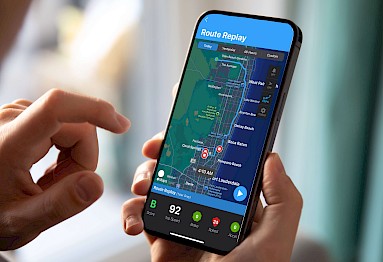
GPS adoption is the standard. Knowing where your trucks and tools are, how long jobs are taking, and whether you're choosing the fastest routes is now the baseline for running a tight operation. Lawn care and landscaping fleets are a good example — trucks and trailers spread across dozens of stops a day, equipment that walks off jobsites, and routes that nobody's looked at in months.
Home service businesses without that full field visibility are leaving real money on the table. Wasted miles, unaccountable drive time, and no paper trail when a customer dispute shows up — those gaps add up fast. And they don't just cost you on individual jobs. They make it harder to track what's actually working, spot where margin is leaking, and get ahead of problems before they turn expensive.
That's why tools like Linxup GPS fleet tracking, asset tracking, and AI-enabled dash cams have moved from nice-to-have to standard equipment for businesses that want to stay competitive.
AI is moving from the back office to the job site. AI tools in 2026 aren't just handling scheduling and invoicing anymore. Across restoration, HVAC, and plumbing, AI-assisted damage assessment, predictive maintenance, and real-time job documentation are changing how work gets estimated, dispatched, and closed out. For fleets, AI is flagging driver risk patterns in real time rather than surfacing them in a weekly report. Tools like Linxup’s Coaching Dashboard not only help fleet owners and managers coach driver behavior but also help lower insurance premiums at renewal.
Dash cams are becoming standard equipment. HVAC, plumbing, electrical, and lawn care trucks spend their days parked in driveways and on residential streets, which means every trip carries liability exposure. Dash cam footage helps settle disputes quickly so businesses can keep moving. AI-powered dash cams also detect risky driving behavior in real time and flag it before it becomes a claim, helping to prevent it in the first place. Linxup home service customers specifically call out the increased accountability dash cams bring, which protects their drivers, their business, and their reputations.
Fleet technology is delivering ROI faster than most operators expect. Fuel, labor, accidents, and maintenance are the four biggest variable cost drivers for any home service fleet, and GPS tracking, route optimization, and driver safety tools have a documented impact on all four. Most fleets see measurable savings from telematics within the first 30 to 90 days, often from visibility alone: discovering vehicles sitting idle, routes being run inefficiently, or after-hours use they were unaware of.
Ultimately, home service businesses that invest in operational technology aren't just getting more efficient; they're building the kind of infrastructure that lets a smaller, harder-to-find workforce do the work of a larger one.
What 2026 means for your home service business
The trends shaping home services in 2026 are easy to spot: aging housing stock, a locked housing market, rising customer expectations, and a labor shortage that isn’t going away anytime soon.
All of it points to the same reality, steady demand paired with real pressure on margins.
The companies that come out ahead won’t necessarily be the biggest or the longest established. They’ll be the ones who adapt, adjust, and make smarter operational decisions along the way.
When fuel, labor, liability, and equipment are your four biggest cost drivers, having tools that give you more visibility and control can make a real difference. They help protect your margins while your business continues to grow.