Why The Skilled Trades Shortage…
Tradesworkers are essential — but their work often goes unnoticed (at least until something breaks). According…
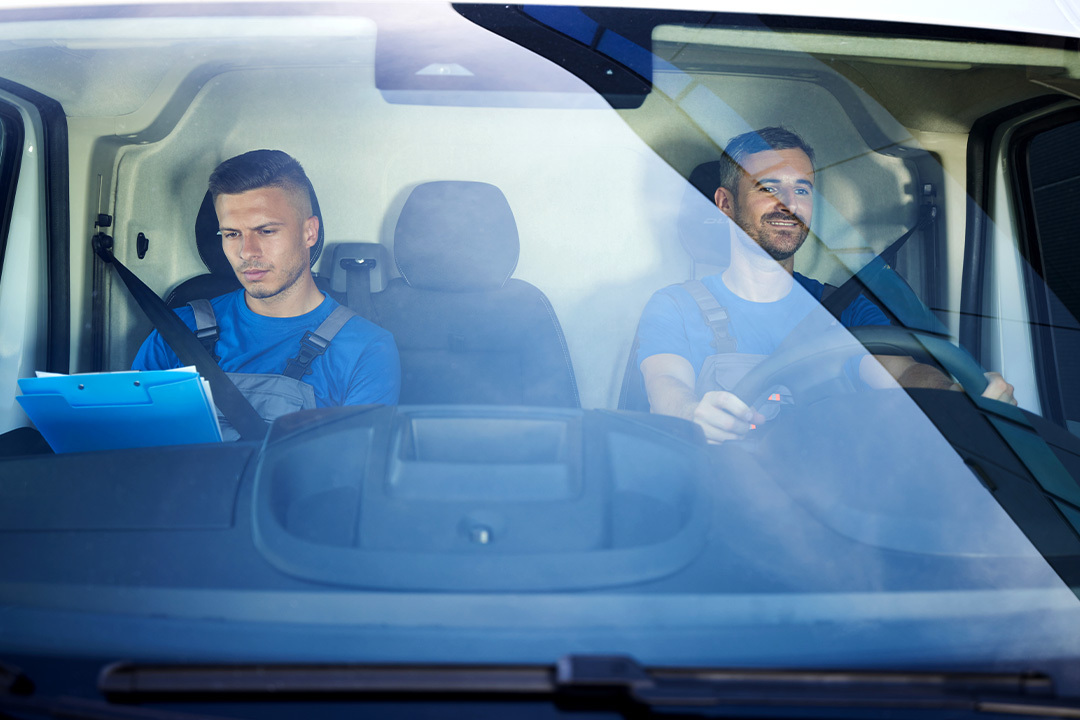

If you’re managing a fleet, you know how it feels when one of your crew gets into an accident. Just last year, the FMCSA recorded over 170,000 crashes, and some of those involved people just like yours. Most aren’t fatal, but that doesn’t mean they’re cheap. Some people see fleet accidents as an opportunity to get money out of your business.
If you manage a crew of HVAC techs or plumbers, your vehicles are out in traffic all day. Accidents happen. So do false claims. A fleet safety camera helps protect your business.
Fleet safety cameras mount on your commercial vehicles so you’ve got a record of what’s happening on the road. Most face both the cab and the road with a single device, keeping you informed if drivers aren’t wearing seatbelts, are speeding, or tailgating.
You’ve heard of dash cams. A fleet safety camera is essentially that—but built for commercial fleets. They often connect to your telematics software to track mileage and idling. Some use AI to alert you the moment a driver does something unsafe.
Alerts can include:
You get the most out of AI-powered cameras when they connect to your fleet management software. That way, you can coach drivers on behavior before it turns into an accident.
| Fleet tracking dash camera | Non-commercial dash camera |
| Tracks GPS, speed, and engine data | Doesn’t track telematics data. |
| Auto-uploads to the cloud or stores via SD card | Only stores via SD card |
| AI alerts for unsafe driving | Basic recording |
| Provides court-admissible event logs | Video only |
| Tamper-proof and high-heat rated | Easily unplugged and damaged |
If you’re running a crew of HVAC techs, plumbers, or pest control drivers, fleet safety cameras were built for your situation. Your trucks are in traffic all day, often in unfamiliar neighborhoods, dealing with other drivers who may not be paying attention.
What you don’t need is a system designed for a 500-truck logistics operation. Look for something that works on your phone, installs without a mechanic, and gives you alerts without requiring a dedicated fleet manager to interpret them.
Fleet safety cameras either hook into your vehicle’s engine or OBD-II port and typically mount to your windshield.
Go with OBD-II if you want a simple install. Hardwired installs may be worth it if you’re also looking for an electronic logging device (ELD).
Types vary by features:
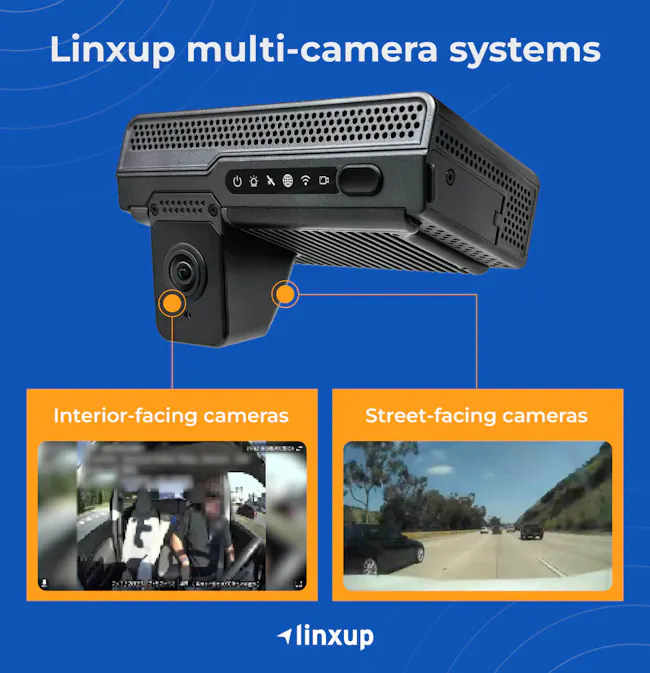
Fleet safety cameras range from $80 to $400. More expensive options are more likely to include multi-camera support or AI alerts, but you can often bring the cost down by bundling with a tracking service contract.
Some large vendors aren’t upfront about pricing. Here’s a breakdown for those that are:
| No Contract | One-Year Contract | Two-Year Contract | Three-Year Contract | |
| LinxCam AI Dash Cam | $399 | N/A | $199 | $99 |
| Lana OcuCam | $255-$350 | $255-$350 | N/A | N/A |
| Vantrue | $260-$380 | N/A | N/A | N/A |
| Falcon Electronics | $375-$1110 | N/A | N/A | N/A |
If you’ve found something cheaper, it’s probably a consumer dash cam. Keep in mind that commercial cameras are built to work with fleet safety systems. Without that integration, they won’t do much to protect your crew from risky behavior.
Fleet safety cameras keep you informed about what’s happening on the road—without requiring you to be everywhere at once.
Without a camera, it’s hard to prove your driver wasn’t at fault. You could end up with a big bill and one less good driver on your crew. Video proof makes fault clear—saving your driver’s livelihood and keeping you out of court.
Do fleet safety cams have GPS? Some do. GPS-enabled dash cameras help you locate drivers in emergencies or confirm they’re at the right job site. That means fewer “I didn’t know where he was” moments and less time chasing down answers. |
Tickets drive up insurance costs and can damage your reputation. Video evidence can help get a ticket dismissed—better for your driver and your bank account.
Getting ahead of bad driving behavior helps you stop an accident before it happens. Drivers may not want to hear it—but a fleet safety cam shows them exactly what happened, turning an argument into a coaching conversation.
Customers don’t always believe the job got done if there’s nothing obvious to show for it. If you work in pest control or HVAC, you know this. Fleet safety cameras can record when your driver arrives and exits, adding a timestamp in your telematics log as backup proof.
Stolen vehicles are a real problem when they’re the backbone of your operation. Fleet safety cameras send alerts when a vehicle turns on unexpectedly and can capture who’s behind the wheel. With GPS, you can track where it’s going.
With Linxup, you can also track trailers, containers, and equipment using GPS asset trackers. If something goes missing, pull it up on your phone and share the location with law enforcement.
Fleet insurance premiums rose 12% in the first half of 2024. Camera systems paired with tracking software give insurers evidence that you take safety seriously—which can work in your favor at renewal time.
If you run a small service business, focus on features that protect your drivers from claims and catch problems before they happen.
One thing that has nothing to do with cameras: pick a company with U.S.-based, human support. If you’re stuck in an automated phone tree when something goes wrong, you’ll regret it.
Most fleet camera systems are built for large logistics operations. If you’re running 5 to 20 service trucks, you don’t need that complexity.
LinxCam installs in minutes, connects to your telematics, and starts flagging unsafe driving the same day. If you hit a snag, you’ve got a real person in the U.S. on the other end of the phone.
See how it works with a free demo.
Yes, if your insurer offers a discount for using them. If they don’t, the long game is coaching your drivers so they build a clean record—which matters at renewal time.
Many include infrared or low-light capabilities. Check the product page to confirm before buying.
Most use on-board SD cards or upload video to the cloud in real time. The best setup does both so you’ve always got a backup.
Fleet safety cams are built for businesses and work with video telematics software to track driver behavior, generate event logs, and support fleet management. A regular dash cam records and stores video on an SD card and that’s it.
Nobody is going to fine you for not having one. But if a driver gets into an accident—or gets blamed for one they didn’t cause—you’ll wish you had the footage. It can save their job and save you from a costly dispute.
Tailgating, speeding, phone use, seatbelt violations, and other unsafe behaviors both on the road and in the cab.
With cloud sync, it goes directly to your fleet management dashboard. Without it, you’ll find it on the camera’s SD card.
If you’re using cloud storage, open your fleet management app. With an SD card, plug it into a laptop or tablet with a matching slot.
Yes, if your fleet management solution supports it. GPS and video data sync automatically so you can see exactly where an event happened.