


Tradesworkers are essential — but their work often goes unnoticed (at least until something breaks). According to Linxup President and Co-Founder Naeem Bari, the lack of visibility is part of a larger problem facing today’s tradesworkers.
“For more than 25 years, we’ve built software for trades like landscaping, transportation, and HVAC,” Bari explains. “And the number one issue our customers face again and again is the shortage of skilled workers.”
The numbers back him up. If that gap isn't closed, a 2024 Parker Strategy Group study commissioned by Bring Back the Trades projects the U.S. could lose $325.6 billion in GDP and leave 2.8 million total jobs vacant across the broader economy by 2030. With nearly half of today’s skilled trades workforce over the age of 45 and many nearing retirement, this presents a significant career opportunity for people entering the workforce — but one that’s still fighting outdated perceptions.
“For a long time, trades were viewed as a fallback option,” Bari says. “But when you look at the reality, the math tells a very different story.”
Trade work as a career path
Skilled trades offer immediate job opportunities, strong earning potential and long-term security — often without the burden of student loan debt. Electricians, plumbers, HVAC technicians, and welders can earn solid incomes soon after completing trade school or apprenticeships, with many building toward six-figure earnings in expedited time. According to the Bureau of Labor Statistics, more than 406,000 people currently work in HVAC and over 517,000 in plumbing — with nearly 192,000 and 244,000 new openings projected in each trade by 2030, respectively.
And the stakes go beyond individual paychecks. The Parker Strategy Group study estimates $210 billion in lost wages if the trades gap goes unfilled — money that would have flowed into local shops, restaurants, and housing in communities across the country.
Plus, these roles are also virtually immune to the wave of AI software affecting most industries.
“AI isn’t fixing a leaky faucet anytime soon,” Bari notes. “These jobs require hands-on expertise. Technology can support the work, but it can’t replace it.”
That's a view increasingly shared across the industry. A recent National Fire Protection Association survey found that 95 percent of trade professionals say AI already supports at least some of their daily work. It’s not replacing tradespeople but handling administrative tasks like paperwork, scheduling, and compliance details so businesses can focus on efficiency and growth. On average, AI is saving trade workers an estimated 3.2 hours per week, or more than 160 hours per year.
That combination — high demand, stability and hands-on problem-solving — is why many tradespeople report high job satisfaction. It’s also why Bari believes more high school graduates should seriously consider learning a trade, especially those interested in entrepreneurship.
“The trades give people the chance not just to learn a skill, but to build a business of their own.”
Common misconceptions
One reason the skilled worker shortage persists is that misconceptions about trade careers tend to linger. Bari hears them often — and is quick to challenge them.
A particularly common myth is that trades don’t involve technology.
“From fleet management software like Linxup to automated equipment, skilled tradespeople use technology every day to work smarter, safer, and more efficiently,” Bari says.
That perception is starting to shift. The same NFPA survey found that 39 percent of respondents believe AI integration is helping attract younger, tech-savvy professionals by reframing the trades as knowledge-intensive, future-oriented careers. For Gen Z workers especially, seeing advanced technology being integrated into daily trade work signals that these aren't jobs stuck in the past.
There's also the assumption that trade work isn't stable, or that success can only be attained via a four-year degree. But consider the reality: the construction trade alone employs more than 2 million people today, with nearly 977,000 new openings projected by 2030, according to the Bring Back the Trades study. Homes still need repairs, businesses still need maintenance, and infrastructure doesn't pause during economic slowdowns. Leaving those jobs unfilled doesn't just hurt the trades — it costs local and state governments an estimated $71.3 billion in lost tax revenue by 2030, meaning less funding for schools, roads, and public services. In many cases, trade work remains steady even when other industries pull back, and most prioritize training, certification, and experience over a college degree.
Tech and safety in tradework
At Linxup, Bari says the goal is to make their work easier, safer, and more sustainable.
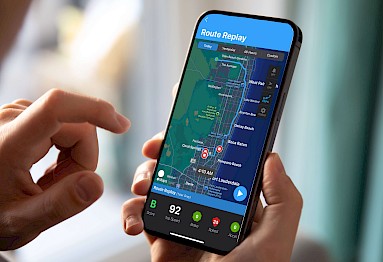
The company provides vehicle and equipment tracking, maintenance monitoring, dash cameras, and safety tools designed specifically for small and mid-sized field service and local transportation businesses. Linxup backs those tools with live, U.S based support to help customers get the most from them day to day.
“Safety is part of our DNA,” Bari says. “We think of it as riding shotgun with the driver — helping protect them and the people around them while they’re doing their jobs.”
That instinct aligns with where the broader industry is heading. AI-powered tools are increasingly being used to flag missing safety equipment on job sites, monitor vehicles and equipment for potential maintenance failures before they happen, and reduce the administrative burden that can lead to errors in the field. The NFPA survey reports that nearly two-thirds of trade professionals say adopting digital tools has already improved how their teams work day to day.
In a recent Linxup survey of more than 250 fleet managers, 84% said their employees would welcome technology designed to protect them from harm. Fleets with safety programs also reported fewer accidents, better driving behavior, and meaningful cost savings; nearly all respondents said their teams perform better when safety is treated as a priority.
Advice for future tradespeople
For those considering a career in the trades or thinking about starting their own service business, Bari’s advice is straightforward.
“Master your craft,” he says. “But don’t ignore the business side. Starting a service business can feel overwhelming, but if you combine strong skills with smart tools and a focus on safety, you can build something that runs smoothly and grows steadily.”
Tools like GPS tracking, dash cameras, and tool monitoring can help new business owners stay organized, protect equipment, and better understand where their time and resources are actually going. With AI handling more of the administrative side of running a business, owners can stay focused on the work that actually drives growth.
Building the road ahead
Though annual events like National Tradesman Day and National Construction Appreciation Week are a step in the right direction, Bari hopes the conversation goes beyond a single moment of recognition.
“Tradespeople keep our communities moving,” he says. “They deserve respect, support and a clear path forward.”
Ready to build a business that runs as hard as you do? See how Linxup helps trade business owners track vehicles, protect equipment, and stay focused on growth. Request a demo.