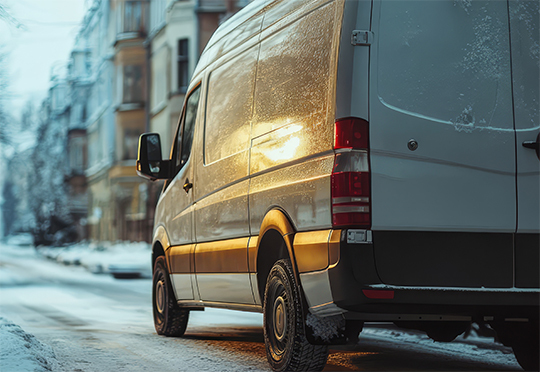


Winter weather puts some extra strain on vehicles (commercial or otherwise), including those in service fleets. An ill-timed snowstorm can cause unfortunate delays for plumbers, electricians, contractors, and a variety of other key service providers people generally only call in cases of emergency — and whose swift response is required to maintain a healthy business.
There are some dramatic ripple effects to vehicles being either unavailable or inaccessible (i.e., unable to reach customers due to road conditions or vehicle breakdowns). In New York, a single day of road shutdowns reportedly puts a $700 million-dollar dent in the economy; as for individual businesses, it isn’t hard to imagine the sort of havoc harsh weather can wreak on unprepared vehicles.
Here’s a look at some of the risks (and costs) presented by cold-weather breakdowns, plus how they can be largely mitigated with the right tools.
The cost of a downed vehicle
Accidents and/or mechanical hiccups can cause missed appointments, longer wait times for customers, extra labor, and even paying and/or waiting for a replacement vehicle — and that’s before getting to the not-insignificant repair bill waiting for you when your own vehicle is returned. It’s not a good time, is what we’re saying.
Strict adherence to regularly scheduled maintenance checks can help mitigate many of these undesirable outcomes, especially when it comes to keeping an eye on your vehicle’s battery. AAA reports that at 32°F, a car battery can lose around 35% of its charge — a figure that can leap to as much as 60% if you happen to live anywhere the temperature dips into the single digits.
It should also be noted that for every 10-degree drop in temperature, tire pressure can fall by 1-2 psi, which impacts traction and accelerates wear. For any service truck that essentially works on-call all winter, not keeping a close watch on both battery life and tire pressure can cause serious wrinkles, although we’re pretty sure nobody who’s changed a truck tire in the freezing snow has called their plight anything quite as playful as a “serious wrinkle.”
How the right tools reduce risk
Safe winter driving practices are serious business; crashes on icy or snowy pavement account for an estimated 1,300 fatalities and 116,800 injuries each year. For a business that sends trucks out in winter conditions to reach customers, a crash can mean danger to all those involved, repair costs, increased insurance premiums, injury claims, legal costs, downtime — the list goes on.
Here’s how using telematics can help:
Dash cams: In the event of a crash or a near-miss, video from inside (or outside) the vehicle provides a clear record of the incident, including road conditions, other vehicles’ behavior, and driver actions. Video evidence protects against unnecessary liability (like a catastrophic nuclear verdict) and speeds up claim resolution.
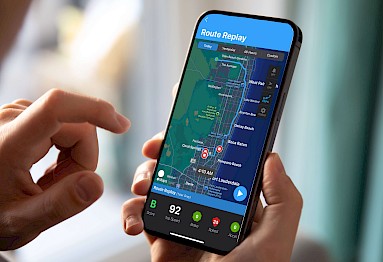
GPS tracking: Tracking where trucks are located, how they’re being driven (speed, braking, route choice), and diagnostics (engine status, battery health) gives dispatchers real-time visibility to redirect around severe weather, spot a vehicle that’s stalled or at risk, or manage idle time. It can also be used to quickly dispatch a tow truck, replacement vehicle, or where to send another driver.
Telematics and other software: Small issues are infamously adept at becoming big problems when temperatures plunge — a battery nearing the end of its life may fail to crank. Tires lose pressure. Fluids thicken, seals contract, and engine components are forced to work harder. Telematics that monitor battery voltage, engine fault codes, and carefully track maintenance schedules allow fleet managers to identify vehicles that need service before they fail. Fleets with their own maintenance programs generally have lower per-mile repair costs, according to ATRI.
Winter isn’t optional
For most of the US, intense and persistent winter weather is somewhat inevitable, but breakdowns and liability losses don’t have to be. For service-fleet operators, the combination of GPS tracking, dash cam footage and telematics isn’t a luxury; it’s part of a sound strategy to keep trucks running and jobs on schedule.