


Quick Breakdown
- Reviews 11 Azuga fleet telematics alternatives tailored for small-to-medium fleets, covering features like safety scores, routing, ELD compliance, and maintenance from providers like Linxup, Motive, Samsara, and more.
- Linxup tops the list with its intuitive map UI, customizable Safety Score & coaching tools, DIY setup, upfront pricing, and reliable US support for straightforward visibility.
- Select based on priorities: budget, fleet scale, safety needs, or integrations—Linxup excels in simplicity and flexibility without long-term contracts.
Azuga is a popular fleet telematics system built for small-to-medium-sized fleets who want to prioritize safety. With OBD-II devices, AI-powered dash cams, real-time GPS tracking, and gamification features, it helps companies monitor everything from speeding and idling to seatbelt usage.
But Azuga isn’t the only option, and it may not be the right fit for fleet owners who want more flexible contract terms or better reporting structures.
Whether you need deeper third-party integrations or simpler pricing structures, here are 11 Azuga alternatives with small service fleets in mind that need straightforward tracking without the complexity.
| Best for | Key features | Pricing | |
| Linxup | Small to mid-sized fleets looking for a user-friendly, high-visibility tool | Map-centric UI, easy DIY setup, updated safety score & coaching dashboard | From $25 per month |
| Motive | Compliance-heavy fleets and trucking companies needing automated workflows | ELD compliance, AI dash cam plus, and integrated spend management. | Quote-based |
| Samsara | Large operations wanting to connect vehicles, equipment, and site security | Connected operations platform, real-time voice coaching, and open API | Quote-based |
| Lytx | Safety-first fleets looking to reduce insurance risks and intensive driver coaching | Video telematics with human-in-the-loop review and driver exoneration data | Quote-based |
| Verizon Connect | Established mid-to-large fleets (5+ units) focused on logistics efficiency | Advanced route optimization, smart dispatch, and robust engine diagnostics | Quote-based |
| CalAmp | Construction and logistics fleets managing a mix of vehicles and heavy machinery | Rugged industrial hardware and specialized sensors for mixed-asset tracking | Quote-based |
| OptimoRoute | Delivery and service businesses with complex, multi-stop daily schedules | Advanced automated routing algorithms and real-time customer ETA links | From $35.10/driver/month |
| Fleetio | Managers focused on total cost of ownership and maintenance automation | Full lifecycle maintenance management and a national shop integration network | Starting at $4/vehicle/month |
| Powerfleet | Enterprises with mixed assets looking for a seamless, factory-installed setup | OEM direct integration (hardware-free) and unified asset data via "Unity” | Quote-based |
| Geotab | Technical fleet managers and enterprises needing deep, customizable data | Robust engine diagnostics, EV tracking, and a massive partner marketplace | Quote-based |
| GPS Insight | Field service fleets (HVAC, Plumbing) that need to sync tracking with work orders | Flexible mapping, field service management (FSM) integration, and US support | Quote-based |
1. Linxup

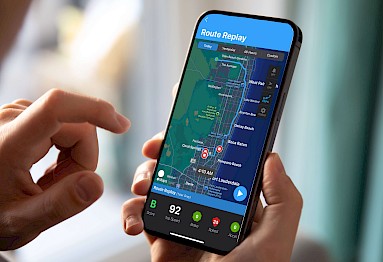
Linxup offers small and mid-sized service fleets a straightforward, user-friendly experience. Whether you’re on a desktop or using the mobile app, the platform’s clean UI is built to save you time. Access important features like full field visibility directly from the map, so you aren't stuck clicking through endless menus to find a vehicle.
Linxup’s driver safety tools, like the Safety Coaching Dashboard and Safety Score, are built for real-time coaching, not just tracking violations after the fact. Set custom thresholds for the behaviors that put your drivers and equipment at risk: speeding, harsh braking, distracted driving, or any combination that fits your operation. You can also weight alerts based on your priorities for the driver Safety Score.
When a driver receives an alert, you see it immediately. That means you can address problems the same day. Drivers get clear feedback on what needs to change, and you can track whether it's actually improving over time. Because the scoring is transparent and data-backed, it’s easier to have driver coaching sessions that lead to improved performance.
Beyond the software, Linxup also wins where many competitors fall short on hardware reliability and support. Linxup emphasizes quick fulfillment and a U.S.-based support team that’s ready to help with onboarding.
For teams that need to get up and running fast, Linxup stands out among top fleet telematics companies and provides a dependable, high-visibility alternative without a steep learning curve.
| Pros | Cons |
|
|
Key Features
- Map-centric fleet visibility
- Custom safety scoring dashboard
- Fast setup with US-based support
Pricing
- Starts at $25 per device per month
- Offers contract or no-contract options
- Offers customized bulk discounts for multiple devices
2. Motive

Motive (formerly KeepTruckin) is popular with companies in highly regulated industries for its advanced tech and high-level compliance. The platform combines traditional GPS tracking with an Electronic Logging Device (ELD) and an AI Dash Cam.
One of the primary differences you’ll notice between Motive and Azuga is the scope of the ecosystem. Motive offers features beyond vehicle monitoring, like spend management, fleet asset management, and automated IFTA fuel tax reporting.
While both platforms offer automated workflows, Motive is often more popular with managers of larger fleets who need a higher level of detail. Both Motive and Azuga offer app marketplaces with a range of tool integrations. However, according to fleet tracking system reviews, Motive is more suitable for fleets that need a data-driven approach to every mile.
| Pros | Cons |
|
|
Key Features
- All-in-one GPS + ELD + AI dash cam
- Automated compliance and IFTA
- Enterprise-grade workflows
Pricing
3. Samsara

While Azuga focuses primarily on the vehicle and the driver, Samsara aims to connect your entire business. It creates a unified view of everything from your vehicles and heavy equipment to your site security cameras, fleet asset management, and even your warehouse workflows.
With an open platform approach, Samsara also offers a large App Marketplace and a robust API. This keeps company data all in one convenient place, so fleets remain easy to manage as the business grows.
The biggest shift you'll notice when moving from Azuga or other Samsara alternatives is the depth of the data and the quality of the hardware in this large, highly integrated ecosystem. Samsara’s AI dash cams are more comprehensive, utilizing "computer vision" to proactively detect subtle risks that can impact safety. This makes it a good choice for larger fleets or those with high insurance premiums.
| Pros | Cons |
|
|
Key Features
- Connected operations platform
- Advanced AI dash cams
- Extensive API and integrations
Pricing
4. Lytx

Lytx combines AI with human reviewers to analyze driving behavior. Instead of sorting through hours of footage yourself, you get the high-priority clips that actually need attention.
But Lytx is built for enterprise fleets with serious liability exposure: trucking companies, transit operations, or anyone facing constant litigation risk. The system delivers detailed incident analysis and retrievable footage that holds up in court, which matters if you're regularly defending against lawsuits.
If your main concern is coaching drivers to avoid accidents and lower insurance costs, not building a legal defense file, simpler systems will do the job without the complexity or price tag.
| Pros | Cons |
|
|
Key Features
- Human-reviewed video telematics
- Intensive coaching and exoneration data
- Configurable risk profiles
Pricing
5. Verizon Connect

Verizon Connect telematics platform provides deep visibility into driver behavior, fuel usage, and maintenance. It features automated geofencing and detailed engine diagnostics, making your maintenance teams more proactive and efficient.
As a branch of a global telecommunications giant, Verizon Connect offers a level of infrastructure that smaller companies struggle to match. It helps large fleets improve their ETAs through insightful live mapping data and "smart dispatch".
However, being part of a global corporation has its downsides: Verizon Connect no longer accepts customers with fewer than five units, making it inaccessible for the smallest businesses.
| Pros | Cons |
|
|
Key Features
- Enterprise route optimization
- Smart dispatch from live map
- Deep engine diagnostics
Pricing
6. CalAmp

CalAmp is a veteran in the telematics space, best known for its high-performance hardware and its unified "iOn" platform. With a focus on edge-to-cloud intelligence, it specializes in capturing deep, technical data from the vehicle’s engine and various sensors.
CalAmp’s boundary-based alerts and sensor monitoring (like door openings or temperature changes) have made it a preferred choice for construction and logistics teams.
While Azuga’s interface centers social leaderboards, CalAmp’s iOn is built for asset security and maintenance. For fleets that manage a mix of light-duty trucks and heavy equipment, CalAmp offers a more technical, industrial-strength approach to tracking that provides visibility into both powered and non-powered assets. This can be key for automating workflows.
| Pros | Cons |
|
|
Key Features
- Rugged industrial hardware
- Edge-to-cloud sensor intelligence
- Advanced geofencing alerts
Pricing
- Quote-based pricing
7. OptimoRoute

While Azuga is a broad telematics platform, OptimoRoute is a specialist tool designed for fleets that need nuanced scheduling and routing tools. It uses advanced algorithms to plan the most efficient sequence of stops, accounting for driver lunch breaks, service windows, and vehicle capacities.
The primary difference is the shift from monitoring to optimization: Azuga tells you how your drivers performed, while OptimoRoute tells them exactly how to work.
The automated route-planning program plans thousands of stops in seconds, significantly reducing the manual work for fleet dispatchers when daily operations involve complex multi-stop routes. It also features live monitoring and an ETA link for customers, providing transparency and reassurance. For service-heavy fleets, the efficiency gains in fuel and time often outweigh the need for gamification.
| Pros | Cons |
|
|
Key Features
- Multi-stop route optimization
- Automated daily route planning
- Real-time ETA sharing
Pricing
- Plan or quote-based, starting at $35.10 per driver/month
8. Fleetio

For managers who think Azuga’s maintenance alerts are too basic, Fleetio is a specialized fleet maintenance management platform that tracks every oil change, tire rotation, and repair, then analyzes them for long-term ROI. This includes everything from acquisition and fuel card integration to detailed service histories and parts inventory.
To help you manage the entire lifecycle of your vehicles, it focuses on the total cost of ownership for fleets rather than just driver behavior. One standout feature of Fleetio is its maintenance shop network with thousands of approved shops. Repair orders automatically go to the Fleetio platform for instant approval and billing.
You can view and approve or reject every line, saving money while keeping maintenance up to date. Fleetio also integrates with major GPS providers to pull in mileage and engine codes, as well as AI dash cams and telematics providers.
| Pros | Cons |
|
|
Key Features
- Full lifecycle maintenance management
- National repair shop network
- Detailed TCO and cost tracking
Pricing
- Plan-based, starting at $4 per vehicle/month
9. Powerfleet (formerly Fleet Complete)

Powerfleet, which recently acquired and integrated the well-known Fleet Complete brand, is known for its connected intelligence. It provides a broader view of the entire operational ecosystem than Azuga does. The Unity platform unifies data from vehicles, mobile assets, and even in-warehouse equipment.
For businesses operating across multiple environments — such as a construction firm that needs to track trucks on the road and forklifts in the yard — Powerfleet offers a connected, high-level view of all company resources. One advantage over Azuga is Powerfleet's deep OEM partnerships with manufacturers like Ford and GM. This allows many fleets to activate telematics directly through the vehicle's factory-installed hardware, without the need for third-party plug-in devices.
While the platform’s complexity can create a steep learning curve, it’s better suited for managers who need enterprise-grade data over simple social leaderboards.
| Pros | Cons |
|
|
Key Features
- Unity unified asset platform
- OEM-embedded telematics options
- Cross-environment visibility (road + yard)
Pricing
10. Geotab

If you’re looking for an Azuga alternative that prioritizes data depth over gamification, Geotab is a powerful and highly technical tool. It has an open platform philosophy, which gives users unrestricted access to their vehicle data.
Geotab’s GO9 devices are highly rated for engine health and diagnostics, including specialized support for Electric Vehicles (EVs). This makes it a good choice for technical fleet managers who want to own their data and use features, like accident recreation and custom reporting, to fine-tune every aspect of their operation.
Unlike Azuga’s relatively simple interface, Geotab has a massive marketplace with numerous integrations that may feel overly complex for the average small business. It’s also worth noting that Geotab sells primarily through a reseller network, which can lead to inconsistent customer support. Plus, it lacks the specialized field efficiency and service delivery tools that field service businesses often need.
| Pros | Cons |
|
|
Key Features
- High-fidelity GO9 engine data
- Open telematics data platform
- Large integration marketplace
Pricing
11. GPS Insight

GPS Insight is a versatile Azuga alternative that balances Azuga’s driver-focused approach with the heavy data needs of mid-sized fleets. The GPS Insight platform is known for its customizable mapping and alert systems, allowing managers to tailor the software to their specific business rules.
Another standout feature of GPS Insight is its built-in field service management (FSM) tools. While Azuga tracks the vehicle, GPS Insight offers a more holistic view of the job itself, including work order management and dispatching.
This makes it a strong contender for HVAC, plumbing, or electrical businesses that need to connect their fleet data directly to their billing and scheduling workflows.
| Pros | Cons |
|
|
Key Features
- Highly customizable mapping and alerts
- Built-in field service tools
- Strong US-based support
Pricing
Choosing the right Azuga alternative for your fleet
The best choice should address your current pain points while scaling with you. When choosing an Azuga alternative, focus on solutions that address Azuga’s common gaps (such as limited customization, data accuracy concerns, or less robust reporting) while meeting your fleet’s operational needs.
Use the following criteria to evaluate which of these alternatives best fits with your business goals.
- Budget: Look for transparent, predictable pricing models that avoid hidden fees and offer affordable contract terms. Seasonal or month-to-month options matter if your business doesn’t run all year long.
- Fleet size: Confirm the platform is optimized for the size of your fleet. Some providers focus on enterprise-level complexity, while others are built for the agility of small businesses.
- Fleet type: Consider tools that offer specialized features for your specific vehicles, whether you manage light-duty service vans, heavy construction equipment, or long-haul trucks.
- Open-source vs. SaaS: Decide between an open platform that offers deep customization and third-party integrations or a turnkey SaaS solution that is easier to deploy and maintain.
- Safety features: Evaluate whether you need proactive AI-driven coaching and real-time in-cab alerts or if standard driver scorecards and incident recording are sufficient.
- Asset tracking: Check if the provider can track non-powered assets like trailers and generators alongside your vehicles to give you a unified view of all company property.
- Real-time communication: Look for platforms that offer seamless communication and route updates to keep your team synchronized throughout the day.
- Analytics: Prioritize "read-at-a-glance" fleet management analytics that turn raw GPS data into actionable insights regarding fuel waste, idling, and overall fleet productivity.
Powerful telematics, built for small fleets
If you’re ready to look for Azuga alternatives, consider the options we’ve reviewed here and their relative pros and cons. Is your goal more transparency? Do you need less administrative friction and a more streamlined platform?
Linxup focuses on exactly that kind of simplicity, delivering high-visibility monitoring and actionable safety data without the burden of rigid, long-term contracts.
You get a streamlined experience that prioritizes the health of your vehicles and the safety of your drivers, and your technology works for you — not the other way around.
Schedule a free demo today to explore how Linxup can modernize your operations and provide the reliability your fleet deserves.