


Quick Breakdown
- Fleet insurance combines multiple vehicles under one policy, helping you control costs and simplify coverage.
- Safety data from GPS tracking, dash cams, and driver coaching helps lower risk and improve premium negotiations.
- Strong maintenance, clear safety policies, and consistent monitoring help reduce claims and long-term insurance expenses.
Fleet insurance is a commercial policy that covers all of your business vehicles under one plan, and for most service businesses, it's one of the largest line items on the books.
For a field service fleet, commercial auto insurance runs $1,200 to $1,800 per vehicle each year. Multiply that across five, ten, or fifteen trucks, and you're looking at one of your highest fixed costs, and one that typically goes up at renewal whether you've had claims or not.
Most owners accept that number and move on. The ones who don't tend to have one thing in common: they show up to renewal with data. Premiums are determined by claims history, driver records, and what you can prove about how your fleet operates day to day. Data doesn’t just show what you know about your fleet, but how you're actively managing risks and making improvements.
Below, we cover how fleet insurance works, what it covers, and what actually drives your costs, including how telematics, GPS tracking, and dash cams help you build a stronger risk profile and why the data you already have may be worth more than you think at your next renewal.

What is fleet insurance?
Fleet insurance is a commercial insurance plan that covers two or more business vehicles under one policy. Instead of managing separate policies for each vehicle, you can insure your vans, trucks, or cars together, making coverage easier to manage and helping you control fleet management costs.
Here are some key benefits of fleet insurance:
- Less paperwork: One policy means one renewal date and one set of documents. Your admin teams can review vehicles, drivers, and claims in one place, saving time and reducing errors.
- Lower per-vehicle costs: Insurers typically offer better rates when they cover multiple vehicles for the same business.
- Easier growth: Adding new vehicles or drivers is usually straightforward, helping you grow your business without constantly updating separate policies.
- Protection when your driver is at fault: If one of your drivers causes an accident, fleet insurance can cover the other party’s injuries and property damage. This helps prevent one incident from becoming a major financial setback.
Note: You should keep personal and commercial vehicle fleet insurance separate. Personal auto insurance applies to everyday driving, while fleet insurance covers work-related use. Running the wrong policy for a work vehicle can leave you with a coverage gap.
How does fleet insurance work?
Fleet insurance works much like standard auto insurance, but it covers multiple vehicles, commercial risks, and drivers under a single plan. Instead of managing separate policies, you use a single policy that provides blanket coverage across your entire fleet.
Here’s how it works:
- Your business qualifies for fleet coverage: Most insurers require at least two or three business vehicles to create a fleet policy. It can include cars, vans, trucks, or specialty vehicles used for daily operations.
- Vehicles and drivers go under one policy: Rather than assigning separate coverage to each vehicle, company fleet insurance applies protection across approved vehicles and authorized drivers.
- Coverage levels are set based on risk: Insurance providers choose liability limits and optional protections based on vehicle value, usage, and industry risk. Your internal fleet safety policy can factor in here too.
- Premiums are calculated fleet-wide: Insurers evaluate driving history, claims data, routes, vehicle types, and safety practices. Strong fleet management policies and consistent processes tend to demonstrate lower risk over time.
- The policy adjusts as your fleet changes: You can usually add or remove vehicles and drivers without needing separate policies, making it easier to grow your business.
What are the types of fleet insurance?
Fleet insurance comes in several forms, such as light and heavy vehicle insurance, depending on the vehicles you operate and the risks you manage. Choosing the right structure matters, both for coverage and for how insurers evaluate your risk.
Here are the most common types:
- Light vehicle fleet insurance: Covers company cars, vans, and small utility vehicles used for service calls, sales visits, or local deliveries. It's a good option if your drivers operate similar vehicles on consistent routes.
- Heavy vehicle fleet insurance: Applies to trucks, tractor-trailers, and other large commercial vehicles used to move goods or equipment. Higher vehicle values and longer routes can increase exposure to accidents and theft.
- Mixed fleet insurance: It covers fleets that include a combination of cars, vans, trucks, or specialty vehicles. A single policy keeps coverage consistent across different vehicle types and simplifies oversight.
- Courier insurance: These policies cover delivery vans operating on tight timelines and high-mileage routes. Frequent stops, urban driving, and time pressure can increase accident risk, which often leads to higher premiums.
- Specialized vehicle insurance: It covers vehicles used in industries like construction, utilities, hazardous-material transport, or electric vehicle operations. These fleets often rely on strong fleet visibility tools to support safety and prevent asset loss.
What does fleet insurance cover?
Business fleet insurance typically covers physical damage, liability, and medical coverage. It’s meant to protect your vehicles, drivers, and cargo in the case of accidents or theft.
Here's what most fleet insurance policies cover:
| Coverage type | What it covers |
| Liability coverage | Bodily injury and property damage your driver causes to other people or vehicles |
| Physical damage coverage (collision) | Repairs to your vehicle after an at-fault accident involving another vehicle or object |
| Comprehensive coverage | Non-collision damage such as fire, theft, vandalism, severe weather, or hitting an animal |
| Uninsured/underinsured motorist coverage | Your vehicles and drivers, if they are hit by someone without enough insurance coverage |
| Personal Injury Protection (PIP) or Medical Payments (MP) | Medical expenses for drivers and passengers injured in an accident, regardless of fault |
| In-transit coverage | Cargo, tools, or equipment, if items are damaged, lost, or stolen while being transported |
| Hired and non-owned auto coverage (HNOA) | Vehicles your business uses but does not own, such as rentals or employee-owned cars used for work purposes |
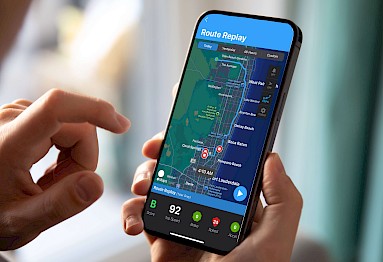
Many fleets also use GPS fleet tracking data to monitor routes and flag risky driving behavior. That same data can also be used for driver coaching conversations, which can support safer driving that can help reduce insurance premiums.
What actually affects your fleet insurance premiums
Insurers evaluate several risk factors, such as vehicle class, loss runs, and your business type, when pricing small business fleet insurance policies. The more they know about your vehicles, your drivers, and how you operate, the more accurately they can set your rate.
Here are the variables that matter most:
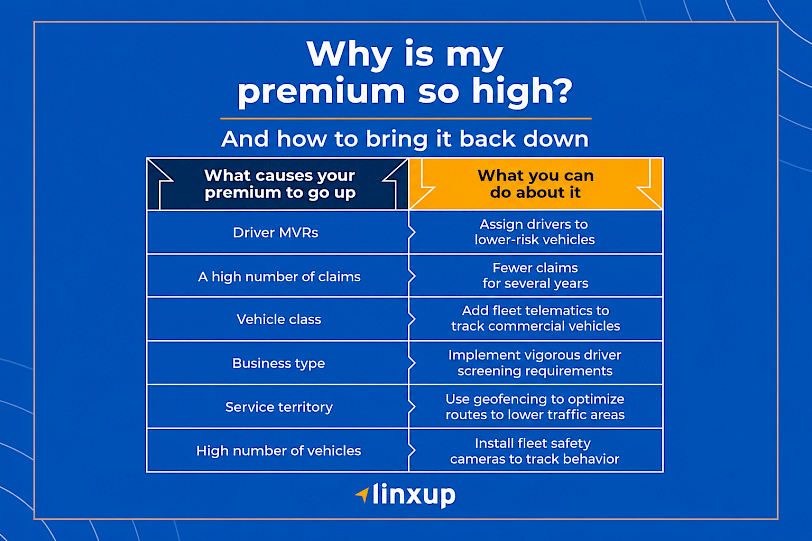
- Number of vehicles: Larger fleets often qualify for lower average costs per vehicle because insurers spread risk across more units. As your fleet size increases, pricing structures can become more favorable.
- Vehicle class: Heavier vehicles like Class 2-3 pickups and medium-duty trucks usually cost more to insure than compact cargo vans. Specialized vehicles can increase premiums due to repair costs, equipment value, or unique operating risks.
- Driving motor vehicle records (MVRs): Driver history strongly influences pricing because insurers use past behavior to estimate future risk. Serious violations, accidents, or license suspensions can quickly increase premiums.
- Loss runs: They show your claims history over the past 3-5 years, including accident frequency and severity. Insurers rely heavily on this data for pricing. Claim forgiveness is rare, but some insurers might offer flexibility if you show clear safety improvements.
- Business type: Industry risk levels affect premiums. Businesses involved in construction, delivery, or transportation often face higher rates than companies with lighter vehicle usage.
- Service territory: Urban routes with dense traffic carry higher accident probability than rural ones. Where your trucks run every day factors into what you pay.
What does this actually cost?
For a field service fleet, HVAC, plumbing, and similar trades typically land between $1,200 and $1,800 per vehicle annually. Construction and contracting fleets generally run $1,500 to $2,200 due to heavier vehicles and equipment. Delivery operations tend to be the most expensive, often $1,800 to $2,500 or more, driven by high mileage, frequent stops, and urban routes.
For a small fleet of five to ten vehicles, total annual premiums commonly fall between $6,000 and $20,000, depending on the factors above. That's a wide range, and where you land comes down largely to your claims history and what you can prove about how your drivers operate daily.
5 ways to reduce fleet insurance expenses
Lower premiums often come from lowering risk. Insurers reward fleets that document safe driving habits, maintain vehicles consistently, and can back it up with data.
Here's where to focus.
1. Use telematics and monitoring data to negotiate
Telematics data gives insurers documented proof of safer driving behavior. Reports from GPS tracking, dash cams, and ELDs can show trends like reduced speeding, smoother braking, and consistent routes over time.
Bringing that data to your broker helps underwriters evaluate real performance instead of assumptions, helping to lower pricing.
“One of the fastest ways small and mid-sized fleets reduce costs is by lowering insurance risk. Telematics doesn’t automatically cut premiums, but it gives insurers the proof they need to justify better pricing over time.” Brandi Hagler, Director of Insurance Partnerships at Linxup
You can streamline everything with Linxup. Our GPS tracking, ELD compliance tools, and video telematics support fleet management strategies that generate clear safety data. You can present these insights during renewal discussions to demonstrate lower risk exposure.
The challenge most fleets run into is that even with good data, not all insurance carriers actually use it in underwriting. Linxup connects directly to Draivn, a platform that takes your telematics data and routes it to carriers before renewal so it gets factored into your quote.
2. Invest in a fleet camera system
Fleet camera systems provide visual evidence that helps clarify the fault when accidents occur. Clear video reduces fraudulent claims, shortens investigations, and helps insurers process cases faster. Fewer disputed claims over time means a cleaner loss run, which directly affects your renewal rate.
Modern systems like the LinxCam AI Fleet Dash Cam also support driver improvement. AI-based alerts flag speeding, harsh braking, and rapid acceleration, helping you reinforce safer habits in real time.
“Dash cams protect fleets from expensive surprises. They clarify fault, reduce fraudulent claims, and shorten claims cycles, which lowers overall loss exposure for insurers.” Brandi Hagler, Director of Insurance Partnerships at Linxup
Video footage also provides real coaching opportunities tied to specific drivers and events rather than general reminders about safe driving.
3. Implement formal safety programs
A written safety policy shows insurers that your business actively manages risk. Clear rules reduce liability exposure and help underwriters see that safety remains a priority across your daily operations.
Strong policies often include:
- Zero tolerance for distracted driving
- Mandatory seatbelt use
- Speed monitoring expectations
- Regular vehicle inspections
Regular driver coaching sessions and safety meetings create a documented record of improvement. Many insurers prefer fleets that develop drivers rather than constantly replace them, since stability often leads to fewer claims.
“When a fleet documents coaching and corrective action tied to telematics data, it signals control and accountability. That’s exactly what underwriters want to see when pricing risk.” Brandi Hagler, Director of Insurance Partnerships at Linxup
Video telematics insights from Linxup can support driver training programs by identifying trends and tracking improvement over time. Consistent safety records also help when preparing for a DOT inspection, since documentation shows proactive compliance management.
4. Stay ahead of maintenance
Mechanical failures cause accidents. Worn brakes, bad tires, and delayed oil changes are preventable, but only if you're tracking your vehicle maintenance schedules. Fleet management platforms can automatically schedule maintenance reminders based on mileage, engine hours, or time intervals.
Consistent maintenance also extends vehicle lifespan and lowers total cost of ownership, two outcomes that show up in your insurance profile over time.
Linxup offers a maintenance management tool to help keep routine service organized and on schedule. You can set service intervals for each vehicle based on mileage, engine hours, or calendar dates, and receive reminders when maintenance is due. You can also create reminders for untracked equipment or one-off tasks, so everything is consistent and managed in one place.
“Stable fleets with predictable routes, consistent drivers, and proactive safety management are simply cheaper to insure. Over time, that stability translates into lower total cost of risk.” Brandi Hagler, Director of Insurance Partnerships at Linxup
5. Adjust deductibles and bundle policies
Higher deductibles usually result in lower monthly premiums because the business accepts more upfront cost if an incident occurs. Many insurers also provide discounts when you bundle multiple vehicles under one provider.
Bundling policies helps simplify coverage and often improves pricing consistency as your fleet grows. Over time, stable risk profiles and consistent coverage structures can help you save on your fleet insurance premiums.
Top insurance providers for service fleets
These five commercial auto insurers are widely recognized for working with small fleets. Worth noting: all of them respond better to fleets that come to the table with telematics data and a clean safety record.
- Leeo Insurance: A managing general agency that writes commercial auto policies for contractors, trade businesses, and light commercial delivery operations. Leeo requires telematics as part of their commercial auto policies, which means GPS tracking and a dash cam are part of the coverage package from the start. For fleets that don't already have telematics in place, Leeo works with Linxup to connect customers with the right equipment so coverage isn't delayed. If you're in the trades and shopping for commercial auto, it's worth getting a quote from a carrier that already understands how your fleet operates.
- Progressive Commercial: One of the largest commercial auto insurers, known for flexible coverage options and strong market share among business vehicle policies.
- The Hartford: Popular with small businesses thanks to customizable coverage and strong financial ratings. A solid option if you're looking for a carrier that understands the needs of an owner-operated business.
- Liberty Mutual: Covers specialized vehicles and industry-specific risks, including construction, delivery, and service fleets. A good fit if your operation runs heavier equipment or mixed vehicle types.
- Travelers: An established carrier with strong underwriting performance and broad commercial vehicle protection. Known for stability and consistent claims handling.
- Acuity Insurance: Acuity is frequently cited for high customer satisfaction in commercial auto and trucking. Worth considering if claims experience and service quality are priorities alongside price.
Lower your fleet insurance premiums with Linxup
Fleet insurance is a necessary cost that adds up quickly. The more clearly insurers understand how your fleet operates, the more accurately they can evaluate risk. Linxup can help provide that clarity.
With GPS tracking, LinxCam AI dash cams, and fleet management software, you can share verified data on mileage, driver behavior, and safety trends. That added visibility helps insurers make more confident underwriting decisions, support stronger renewal outcomes, and reduce surprises when your policy is reviewed.
Linxup helps you build that record and put it in front of the right people. Through our integration with Draivn, your telematics data gets routed directly to carriers who use it in underwriting, so your safety improvements show up in your quote rather than getting lost in the process.
Book a free demo today to see how Linxup helps lower your fleet insurance costs.
Fleet insurance FAQ
On average, how much does fleet insurance cost per month?
For field service fleets, HVAC, plumbing, and similar trades, most businesses pay between $100 and $150 per vehicle per month. Construction and contracting fleets typically run higher, closer to $125 to $185 per vehicle. Delivery operations tend to be the most expensive. Total annual costs for a five- to ten-vehicle fleet commonly fall between $6,000 and $20,000 depending on vehicle type, driver history, location, and claims record. Safer fleets with documented records tend to land toward the lower end.
How do I get fleet insurance quotes from providers?
Contact commercial insurance brokers or carriers and provide details about your vehicles, drivers, operations, and claims history. Having telematics, GPS, and safety data ready can help insurers assess risk more accurately and provide competitive quotes. Linxup helps, in partnership with Draivn, which automatically routes your telematics data to carriers that use it in quoting to save you time and money.
What are the differences between fleet and individual commercial auto insurance?
Fleet insurance covers multiple vehicles under one policy, while individual commercial auto insurance covers each vehicle separately. A fleet structure simplifies administration and often helps control long-term fleet management costs.
What are the best ways for small businesses to lower fleet insurance premiums?
Improve driver safety, maintain vehicles regularly, and use telematics data to demonstrate lower risk. Clear safety policies, driver coaching programs, and strong fleet asset management practices often help businesses qualify for better renewal rates.