


Quick Breakdown
- Commercial auto premiums are no longer just about past claims. Carriers are evaluating how actively you manage driver behavior, maintenance, and safety right now.
- Telematics data gives you documented evidence to bring to renewal: safety scorecards, coaching records, and trend data that give your broker grounds to push back on increases.
- Having a telematics system isn't enough on its own. Fleets that configure it, use it consistently, and document their safety program are the ones that see real savings.
How Telematics Lowers Your Commercial Insurance Costs
If your commercial auto insurance renewal made you do a double-take this year, you are not alone. Some have been with the same carrier for years, never missed a payment, and still opened a renewal to find a number that didn't make sense.
What most fleet operators don't realize is that your rate is no longer about your past claims. Premiums are based on risk, not just claims. Your premium is a real-time snapshot of how your fleet operates: how your drivers behave, when and where you drive, how well you maintain vehicles, and how effectively you manage safety.
Premiums for commercial auto insurance are increasing steadily, driven by rising repair costs, increased accident frequency, and the growing number of claims related to distracted driving. According to industry reports, the average premium for commercial auto insurance has increased by nearly 50% since 2020. For small service fleets, that increase can limit your company’s growth and how many trucks you can afford to keep on the road.
The good news is that the same telematics data you’re already collecting can help you improve your position at renewal. Telematics data can help reduce commercial auto insurance premiums by showing carriers you're actively managing driver behavior, vehicle maintenance, and safety — with documented evidence to back it up.
|
This guide breaks down what insurance carriers are actually looking at, how telematics data fits in, and steps you can take to make sure your fleet’s data is working in your favor.
|

How are commercial insurance premiums set?
Commercial auto insurance premiums are calculated based on estimated future risk, not just your claims history. Carriers look at how your fleet operates today through driver behavior, vehicle condition, territory, and documented safety programs, and price accordingly.
The insurance carrier is asking: “Given everything we know about this fleet, how likely are they to have losses next year, and how large might those losses be?”
Historically, underwriters leaned heavily on broad factors such as:
- Industry and operation type (construction vs. delivery vs. service)
- Vehicle types and values
- Territory (where you operate and garage vehicles)
- Driving records and loss history
- Limits, deductibles, and coverage options
Your loss runs, or past claims, are still a big piece of the puzzle, but they are backward-looking. They show what has already happened, not what's coming.
When your insurance policy comes up for renewal, an underwriter builds a picture of your fleet’s risk. Think of it as a checklist and scorecard rolled into one:
- Gather data: application, schedules, driver lists, MVRs, loss runs, and any additional information your broker provides.
- Benchmark your fleet: compare your losses, driver mix, and operations to similar fleets in the same industry and region.
- Evaluate risk controls: do you have written safety policies, driver training, telematics, or other formal programs?
- Apply rating models: credits for favorable characteristics, surcharges for riskier ones.
- Decide terms: pricing, deductibles, whether to renew, and any conditions or requirements.
Today, documented safety programs and telematics-based reporting are increasingly part of that underwriting checklist. Commercial insurance carriers want to see that you’re not just hoping drivers behave — you’re monitoring, coaching, and improving.

What are insurance carriers looking for in your fleet?
Are underwriters trying to answer a simple question: is this fleet well-managed or high-risk? Your telematics can make that easier, but their core signals fall into two buckets: high-risk indicators that raise your rates and low-risk indicators that work in your favor.
What signals tell carriers your fleet is high-risk?
These are the patterns that make carriers nervous. Even if your recent claims are relatively low, too many of these signals can put upward pressure on your premium:
- Frequent, sustained speeding: not just momentary over-the-limit blips, but patterns of regular speeding, usually 10–15 mph over posted limits.
- Hard braking and harsh acceleration: a high rate of harsh events per 100 miles suggests aggressive driving and higher collision risk.
- Distracted driving: mobile phone use, eyes off the road, or in-cab behaviors captured by AI dash cams or telematics.
- Nighttime driving patterns: a large portion of miles between late evening and early morning hours, when fatigue, impaired drivers, and visibility issues increase risk.
- Driving high-traffic, high-risk routes: fleets that primarily drive in dense traffic, high-incident corridors, or claim-prone zip codes can be a red flag.
- Poor or undocumented maintenance: missed inspections, overdue services, recurring mechanical issues, or lack of a written preventive maintenance program.
- No formal safety program: no written policies, no recurring training, and no evidence that incident trends are reviewed and acted on.
In many small fleets, these issues exist informally: “We know who our problem driver is” or “Our mechanic keeps an eye on the trucks.” Without documentation and trend data, underwriters see a question mark instead of a managed risk.
What signals tell carriers your fleet is well-managed?
These are the factors that help brokers argue for better pricing or push back against large increases:
- Verified mileage, routes, and territories: GPS fleet tracking data confirms your driver’s service territories, actual driving patterns, and hours of service.
- Consistent, documented driving behavior: telematics reports showing relatively low incident rates, stable scores, and minimal outliers.
- Preventive maintenance records: clear schedules, completed work orders, and alerts that are addressed promptly rather than ignored.
- Driver coaching sessions on file: documented conversations tied to driving pattern data and specific events, with follow-up and improvement over time.
- Safety scores that show progress: for example, a significant reduction in harsh braking events per 1,000 miles over six months.
- Video evidence from dash cams: incidents where dash cam video clearly shows your driver was not at fault or that helped resolve a claim quickly.
- Written safety policies and procedures: onboarding checklists, seatbelt rules, distracted driving policies, and clear steps for addressing repeat issues. The follow-through matters just as much as the policy itself.
- Leadership engagement: owners or managers reviewing safety dashboards regularly, not just once a year at renewal.
If you can’t speak to these things with data, it’s hard to make a case to insurance underwriters. For small fleets, it can feel like one more thing on the list, but the ones that put simple processes in place and follow through consistently will see real savings at renewal time.
Where do telematics fit in with insurance?
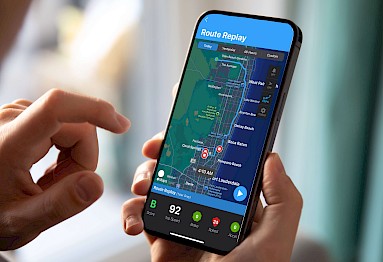
Telematics — GPS tracking combined with sensor and video data — turns your fleet’s daily operations into objective, ongoing risk data. Instead of telling insurance carriers “we’re safe, trust us,” you have real data showing how your drivers perform and how your vehicles are being used.
When used consistently, telematics supports your insurance story in several ways:
It gives carriers a risk score based on actual driving behavior
Rather than lumping your fleet into a generic risk category, insurance carriers and brokers can reference telematics-based safety scores driven by real events: speeding, harsh braking, cornering, following distance, and more. It shifts the conversation from reviewing your loss run history to showing how your drivers' day-to-day performance — and how it’s improving.
It catches and documents unsafe behaviors before they become claims
You can spot high-risk drivers early, coach them, and track improvement. Addressing and documenting a near-miss carries more weight at renewal than dealing with an at-fault accident after the fact.
It protects your fleet against false or inflated claims
Forward- and driver-facing dash cams capture what really happened before and during an incident. That footage helps reduce or defend against accident claims in the majority of serious events, either by exonerating drivers or speeding up the claims process. Our recent safety survey found that 88% of fleet managers say dash cams helped reduce or defend against accident claims, and many fleets tie that directly to lower costs at renewal.
It verifies actual mileage and routes
GPS fleet tracking gives you verified mileage data and route history to help ensure your rating is accurate. Some insurers also have mileage bands or per-driver limits that affect pricing; telematics gives you credible, clean numbers for those discussions.
It documents maintenance history and vehicle health
A well-run maintenance program backed by fault codes, DVIRs, and service schedules from your telematics platform shows you’re actively managing mechanical risk and reducing the chances of catastrophic failures.
It proves that a formal safety program exists and is active
Dashboards, trend reports, and coaching logs become tangible evidence that you’re not passive — you’re running a safety program with measurable steps and outcomes.

How do carriers use telematics at renewal?
At renewal, carriers and brokers use telematics data to build a risk picture that goes beyond your loss runs. Fleets that bring scorecards, trend reports, and coaching documentation to the table give their broker something to work with. Fleets that don't are priced on industry averages — not their actual performance.
If you can provide a driver safety report, your broker can:
Package telematics scorecards, trend graphs, and coaching summaries as part of the renewal submission. This shows insurance carriers what safety measures your fleet prioritizes and the progress that's been made.
- Highlight positive changes since last year—reduced incidents, improved scores, fewer at-fault accidents. Year-over-year improvement is one of the most powerful things you can bring to a renewal conversation.
- Push back on blanket increases by showing that your fleet is outperforming the industry average. Carriers often apply across-the-board rate increases based on industry-wide loss trends — not your specific performance. If your data shows your fleet is running cleaner than the average operation in your class, your insurance broker has grounds to negotiate.
This is where GPS fleet tracking and dash cams are moving from “nice to have” to “expected.” Some insurance carriers, like LEEO, now require dash cams as a condition of coverage. Others are moving in the same direction through underwriting conditions, safety requirements, or preferred-carrier programs. Having video and GPS data in place now puts you on the right side of that trend.
Having video like LinxCam footage and GPS fleet tracking in place now puts you on the right side of that trend. For fleets that have expanded, changed territories, or added vehicles mid-term, that data keeps your renewal submission clean and accurate.
How do I connect my telematics data to carriers that actually use it?
Even fleets with strong safety data were running into the same problem — no clear path to insurance carriers that actually use it. That's exactly why Linxup partnered with Draivn. Draivn connects Linxup customers directly to commercial auto insurers that factor telematics into their underwriting decisions. Your Linxup data flows into a quoting process built around it, so you're not manually pulling reports and hoping the right carrier sees them. Safer fleets get faster quotes and more accurate pricing.
What telematics data actually gets shared with insurers?
When you use telematics data for insurance discounts or underwriting credits, you typically need driver consent to share information with your carrier or through your broker. That sharing can range from high-level safety scores and trend reports to more detailed incident data in certain programs.
Key points to keep in mind:
- Understand exactly what data is being shared, how often, and with whom.
- Many programs rely on aggregated or scored data rather than raw video or GPS traces.
- Reputable providers and insurers align with privacy and data security guidelines, and many allow you to control what you share.
Before you enroll in any insurance-linked telematics program, ask your provider to walk you through the data flow and privacy terms, and make sure they align with your own driver communication and consent practices.

How does a safety program help lower my commercial insurance premiums?
Telematics on its own is just data. What underwriters and carriers really want to see is a safety program that uses that data to change behavior. A documented safety program gives your broker something concrete to bring to the underwriter — and gives the underwriter a reason to price your fleet differently from one that shows up with nothing.
When your account is under review, carriers look for proof of:
- Driver coaching: notes tied to specific events or trends, not just informal conversations.
- Safety meetings: regular toolbox talks, monthly safety reviews, or quarterly training, with agendas and attendance records.
- Incident response processes: how you investigate accidents, review video, and implement corrective actions.
- Safety scoring and accountability: how you measure driver performance, set expectations, and recognize improvement or address repeat issues.
- Policy enforcement: proof that your written policies (seatbelts, phone use, speeding limits) are actually enforced.
Telematics makes that documentation easy to access quickly. Event reports, scorecards, and dashboards are time-stamped, driver-specific records of what you monitored and how things changed.
From the insurance carrier’s perspective, a fleet that monitors behavior, coaches drivers, and tracks improvement is fundamentally different from one that simply hopes drivers are safe. The same number of trucks can represent very different risk profiles depending on how actively they’re being managed.
Consider the difference between two fleets with similar loss histories:
| Fleet A — Shows Up Unprepared | Fleet B — Shows Up With Data |
| Loss run only | 6 months of safety score trends |
| Verbal statement: “our drivers are careful” | Documented coaching sessions by the driver |
| No coaching documentation | Video-backed evidence of improvement |
| No trend data | Fewer harsh events per 1,000 miles (shown) |
| No video evidence | Exoneration clips from dash cams |
| Result: No negotiating leverage | Result: Grounds to push back on increases |
“When a fleet documents coaching and corrective action tied to telematics data, it signals control and accountability. That’s exactly what underwriters want to see when pricing risk.” Brandi Hagler, Director of Insurance Partnerships, Linxup
How do I start preparing for insurance renewals with telematics?
The best time to start is well before your renewal date. Changes that create visible, documentable progress take time to show up in the data, and underwriters want to see trends, not snapshots. Here's where to start
Step 1: Start tracking driver behavior consistently
Before you can show improvement, you need a baseline. Give yourself 30-60 days of clean data ahead of your renewal conversations.
- Enroll all active vehicles and drivers with your telematics solution
- Confirm GPS tracking is capturing route history, mileage, and operating territory
- Install dash cams and set alerts based on your fleet's priorities
- Enable and review key safety metrics: speeding, harsh events, seatbelt use, distracted driving
- Establish a 30-60 day baseline report
Step 2: Formalize and document your safety program
From an underwriter's perspective, if it isn't written down, it didn't happen. A documented safety program turns your telematics data into a defensible record.
- Create written policies on speeding, mobile phone use, and seatbelts
- Schedule recurring safety meetings and keep attendance logs
- Tie coaching sessions to specific telematics or video events and record outcomes
- Use your telematics systems to keep documentation in one place
Step 3: Pull and understand your loss runs
Your loss runs tell you where your fleet has been. Your telematics data tells you where it's going. Connecting the two is how you build a story for underwriters.
- Request your loss runs at least once a year.
- Review patterns: types of claims, time of day, drivers involved, and preventable vs. non-preventable incidents.
- Map patterns to telematics data to show targeted response.
This is where documentation pays off. If you can say “We had three rear-end collisions two years ago; since implementing following-distance alerts and coaching, we’ve had none,” that kind of evidence of improvement can help drastically impact a renewal conversation.
Step 4: Have the right conversation with your broker
Your broker should be a partner in telling your fleet's story to the market. Bring them into your telematics data before renewal, not during it. If they don't know how to translate driver behavior data into underwriting language, consider finding one who does.
Ask your broker:
- “Can telematics and dash cam data help us at renewal?”
- “What specific reports or trends would be most useful to underwriters?”
- “Which carriers are most receptive to telematics-based safety programs?”
- “How can we use our safety improvements to push back on blanket increases?”
Step 5: Implement or Expand Dash Cams
Dash cams do two jobs: they protect your drivers when something goes wrong, and they give you specific, visual evidence for coaching when something almost goes wrong. Start with your highest-risk vehicles or drivers and expand fleetwide.
- Start with your highest-risk vehicles or drivers and expand fleetwide
- Use video as a coaching tool, not just a record of what went wrong.
- Capture, save, and organize exoneration clips where your drivers were not at fault.
- When an event gets flagged, have a real conversation about it. Video gives real context with specific instances you can address and find out what happened to build trust and encourage improvement.
Some insurance companies now require dash cams through underwriting conditions. Fleets that have dash cams in place now are better positioned to coach drivers, reduce claims, and negotiate from strength at renewal.
Questions to ask before your next insurance renewal
Is your insurance carrier using your telematics data?
Not all insurance carriers are automatically factoring in telematics data for pricing decisions. Ask these questions before your next renewal:
- Does the carrier actually use telematics data in their underwriting or pricing?
- Have they asked for a safety scorecard or driver behavior report?
- Are they rewarding documented safe driving, or just loss history?
- Do they have a preferred program for telematic-equipped fleets?
If the answers are unclear, it may be worth reassessing whether you’re with a carrier that values the data you’re already collecting. Linxup’s integration with Draivn helps connect fleets that have invested in safety with insurers that actually reward it.
Ask these questions before your next renewal:
- Does the carrier actually use telematics data in their underwriting or pricing?
- Have they asked for a safety scorecard or driver behavior report?
- Are they rewarding documented safe driving, or just loss history?
- Do they have a preferred program for telematic-equipped fleets?
If the answers are unclear, it may be worth reassessing whether you’re with a carrier that values the data you’re already collecting. Linxup’s integration with Draivn helps connect fleets that have invested in safety with insurers that actually reward it.
What your broker should ask you at renewal
- Can you provide a driver safety report or telematics scorecard for the past 6–12 months?
- Do you have documented driver coaching tied to specific events?
- Have your safety scores or event rates improved? By how much?
- Can you share dash cam footage that exonerated your drivers?
- Do you have a written safety policy and meeting schedule?
- Are preventive maintenance records up to date and easy to export?
- Are there any high-risk drivers or routes you are actively addressing?
Being able to answer “yes” to most of these questions — and backing it up with data — can significantly change how your renewal conversation goes.
The record you start now pays off at every renewal
Commercial auto insurance probably isn’t getting cheaper anytime soon. But fleets that understand how insurance carriers evaluate risk have a real advantage.
When you combine GPS tracking, dash cams, and a documented safety program, your fleet stops looking like an unknown risk. Instead, it becomes an operation with a track record that insurance carriers and brokers can actually evaluate.
That changes the conversation at renewal.
Linxup gives service fleet operators the tools to do all of that — GPS tracking, AI-enabled dash cams, and integrations that connect your safety record to the insurance market. The investment in those tools can pay back faster than most owners expect, not just in safer drivers, but in a stronger position every time renewal comes around.
Schedule a free demo and see how Linxup helps fleets lower their insurance costs.